 / PLN
/ PLN


- Server Dell PowerEdge R570 24x2.5" with 1x 6747P, 512GB RAM, H965i, 2x 3.84TB SSD SAS 12G RI 2.5", 2x25GbE SFP28, 1x Nvidia L40S 48GB, 2x PSU 1800W, rails, bezel, iDRAC10 CoreThis set contains: 1x Dell PowerEdge R570 24x2.5" server platform 1x Processor Intel Xeon 6747P 48-core 2.7GHz 288MB 330W SRVEZ 8x 64GB DDR5 RDIMM 4800MHz RAM ...Calculating delivery time...In stock 4Warranty 36 monthsPLN 242,870.24 PLN 197,455.48
- Server Dell PowerEdge R570 24x2.5" with 1x 6747P, 256GB RAM, H965i, 2x 3.84TB SSD SAS 12G RI 2.5", 2x25GbE SFP28, 1x Nvidia L40S 48GB, 2x PSU 1800W, rails, bezel, iDRAC10 CoreThis set contains: 1x Dell PowerEdge R570 24x2.5" server platform 1x Processor Intel Xeon 6747P 48-core 2.7GHz 288MB 330W SRVEZ 4x 64GB DDR5 RDIMM 4800MHz RAM ...Calculating delivery time...In stock 4Warranty 36 monthsPLN 192,870.25 PLN 156,805.08
- Server Dell PowerEdge R570 24x2.5" with 1x 6747P, 128GB RAM, H965i, 2x 3.84TB SSD SAS 12G RI 2.5", 2x25GbE SFP28, 1x Nvidia L40S 48GB, 2x PSU 1800W, rails, bezel, iDRAC10 CoreThis set contains: 1x Dell PowerEdge R570 24x2.5" server platform 1x Processor Intel Xeon 6747P 48-core 2.7GHz 288MB 330W SRVEZ 4x 32GB 4800MHz DDR5 RDIMM RAM ...Calculating delivery time...In stock 4Warranty 36 monthsPLN 172,070.25 PLN 139,894.51
- Server Dell PowerEdge R570 24x2.5" with 1x 6747P, 64GB RAM, H965i, 2x 3.84TB SSD SAS 12G RI 2.5", 2x25GbE SFP28, 1x Nvidia L40S 48GB, 2x PSU 1800W, rails, bezel, iDRAC10 CoreThis set contains: 1x Dell PowerEdge R570 24x2.5" server platform 1x Processor Intel Xeon 6747P 48-core 2.7GHz 288MB 330W SRVEZ 2x 32GB 4800MHz DDR5 RDIMM RAM ...Calculating delivery time...In stock 4Warranty 36 monthsPLN 157,470.25 PLN 128,024.59
- Server Dell PowerEdge R570 24x2.5" with 1x 6521P, 64GB RAM, H365i, 2x10/25GbE SFP28, 2x PSU 1100W, rails, iDRAC10 CoreThis set contains: 1x Dell PowerEdge R570 24x2.5" server platform 1x Processor Intel Xeon 6521P 24-core 2.6GHz 144MB 225W SRVNS 2x 32GB 4800MHz DDR5 RDIMM RAM ...Calculating delivery time...In stock 5Warranty 36 monthsPLN 80,091.24 PLN 65,114.83
- Server Dell PowerEdge R570 24x2.5" with 1x 6511P, 1024GB RAM, H365i, 2x50GbE SFP56, 2x PSU 1100W, rails, iDRAC10 CoreThis set contains: 1x Dell PowerEdge R570 24x2.5" server platform 1x Processor Intel Xeon 6511P 16-core 2.3GHz 72MB 150W SRVU9 16x 64GB DDR5 RDIMM 5600MHz RAM ...Calculating delivery time...In stock 5Warranty 36 monthsPLN 314,091.24 PLN 255,358.73
- Server Dell PowerEdge R570 24x2.5" with 1x 6511P, 32GB RAM, H365i, 2x50GbE SFP56, 2x PSU 1100W, rails, iDRAC10 CoreThis set contains: 1x Dell PowerEdge R570 24x2.5" server platform 1x Processor Intel Xeon 6511P 16-core 2.3GHz 72MB 150W SRVU9 2x 16GB DDR5 RDIMM 5600MHz RAM 1...Calculating delivery time...In stock 4Warranty 36 monthsPLN 73,191.25 PLN 59,505.08
- Server Dell PowerEdge R570 24x2.5" with 1x 6511P, 64GB RAM, H365i, 2x50GbE SFP56, 2x PSU 1100W, rails, iDRAC10 CoreThis set contains: 1x Dell PowerEdge R570 24x2.5" server platform 1x Processor Intel Xeon 6511P 16-core 2.3GHz 72MB 150W SRVU9 4x 16GB DDR5 RDIMM 5600MHz RAM 1...Calculating delivery time...In stock 4Warranty 36 monthsPLN 81,891.25 PLN 66,578.25
- Server Dell PowerEdge R570 24x2.5" with 1x 6511P, 128GB RAM, H365i, 2x50GbE SFP56, 2x PSU 1100W, rails, iDRAC10 CoreThis set contains: 1x Dell PowerEdge R570 24x2.5" server platform 1x Processor Intel Xeon 6511P 16-core 2.3GHz 72MB 150W SRVU9 4x 32GB DDR5 RDIMM 5600MHz RAM 1...Calculating delivery time...In stock 4Warranty 36 monthsPLN 103,091.24 PLN 83,814.02
- Server Dell PowerEdge R570 24x2.5" with 1x 6505P, 1024GB RAM, H365i, 2x 1.92TB SSD SATA 2.5", 2x50GbE SFP56, 2x PSU 1100W, rails, iDRAC10 CoreThis set contains: 1x Dell PowerEdge R570 24x2.5" server platform 1x Processor Intel Xeon 6505P 12-core 2.2GHz 48MB 150W SRVU7 16x 64GB DDR5 RDIMM 4800MHz RAM ...Calculating delivery time...In stock 5Warranty 36 monthsPLN 269,525.24 PLN 219,126.21
- Server Dell PowerEdge R570 24x2.5" with 1x 6505P, 512GB RAM, H365i, 2x 1.92TB SSD SATA 2.5", 2x50GbE SFP56, 2x PSU 1100W, rails, iDRAC10 CoreThis set contains: 1x Dell PowerEdge R570 24x2.5" server platform 1x Processor Intel Xeon 6505P 12-core 2.2GHz 48MB 150W SRVU7 8x 64GB DDR5 RDIMM 4800MHz RAM 2...Calculating delivery time...In stock 5Warranty 36 monthsPLN 169,525.24 PLN 137,825.40
- Server Dell PowerEdge R570 24x2.5" with 1x 6505P, 256GB RAM, H365i, 2x 1.92TB SSD SATA 2.5", 2x50GbE SFP56, 2x PSU 1100W, rails, iDRAC10 CoreThis set contains: 1x Dell PowerEdge R570 24x2.5" server platform 1x Processor Intel Xeon 6505P 12-core 2.2GHz 48MB 150W SRVU7 8x 32GB 4800MHz DDR5 RDIMM RAM 2...Calculating delivery time...In stock 4Warranty 36 monthsPLN 127,925.24 PLN 104,004.26
- Server Dell PowerEdge R570 24x2.5" with 1x 6505P, 128GB RAM, H365i, 2x 1.92TB SSD SATA 2.5", 2x50GbE SFP56, 2x PSU 1100W, rails, iDRAC10 CoreThis set contains: 1x Dell PowerEdge R570 24x2.5" server platform 1x Processor Intel Xeon 6505P 12-core 2.2GHz 48MB 150W SRVU7 4x 32GB 4800MHz DDR5 RDIMM RAM 2...Calculating delivery time...In stock 4Warranty 36 monthsPLN 98,725.24 PLN 80,264.42
- Server Dell PowerEdge R570 24x2.5" with 1x 6505P, 64GB RAM, H365i, 2x 1.92TB SSD SATA 2.5", 2x50GbE SFP56, 2x PSU 1100W, rails, iDRAC10 CoreThis set contains: 1x Dell PowerEdge R570 24x2.5" server platform 1x Processor Intel Xeon 6505P 12-core 2.2GHz 48MB 150W SRVU7 4x 16GB DDR5 RDIMM 4800MHz RAM 2...Calculating delivery time...In stock 4Warranty 36 monthsPLN 84,925.24 PLN 69,044.91
- Server Dell PowerEdge R570 24x2.5" with 1x 6505P, 32GB RAM, H365i, 2x 1.92TB SSD SATA 2.5", 2x50GbE SFP56, 2x PSU 1100W, rails, iDRAC10 CoreThis set contains: 1x Dell PowerEdge R570 24x2.5" server platform 1x Processor Intel Xeon 6505P 12-core 2.2GHz 48MB 150W SRVU7 2x 16GB DDR5 RDIMM 4800MHz RAM 2...Calculating delivery time...In stock 3Warranty 36 monthsPLN 77,225.24 PLN 62,784.75
- Server Dell PowerEdge R570 24x2.5" with 1x 6511P, 512GB RAM, H365i, 2x50GbE SFP56, 2x PSU 1100W, rails, iDRAC10 CoreThis set contains: 1x Dell PowerEdge R570 24x2.5" server platform 1x Processor Intel Xeon 6511P 16-core 2.3GHz 72MB 150W SRVU9 8x 64GB DDR5 RDIMM 5600MHz RAM 1...Calculating delivery time...In stock 4Warranty 36 monthsPLN 189,291.24 PLN 153,895.32
- Server Dell PowerEdge R570 24x2.5" with 1x 6511P, 256GB RAM, H365i, 2x50GbE SFP56, 2x PSU 1100W, rails, iDRAC10 CoreThis set contains: 1x Dell PowerEdge R570 24x2.5" server platform 1x Processor Intel Xeon 6511P 16-core 2.3GHz 72MB 150W SRVU9 8x 32GB DDR5 RDIMM 5600MHz RAM 1...Calculating delivery time...In stock 3Warranty 36 monthsPLN 141,691.24 PLN 115,196.13
- Server Dell PowerEdge R7715 16x2.5" with 1x EPYC 9845, 32GB RAM, H975i, 2x 480GB SSD SATA 2.5", 8x 3.2TB SSD SAS 12G MU 2.5", 2x25GbE SFP28 OCP 3.0, 2x PSU 2400W, rails, iDRAC 10 CoreThe set includes: 1x Dell PowerEdge R7715 16x2.5" server platform 1x Processor AMD EPYC 9845 160-core 2.1GHz 320MB 390W 2x 16GB DDR5 RDIMM 5600MHz RAM 2x SSD 4...Calculating delivery time...In stock 4Warranty 36 monthsPLN 135,231.54 PLN 109,944.34
- Server Dell PowerEdge R7715 16x2.5" with 1x EPYC 9845, 64GB RAM, H975i, 2x 480GB SSD SATA 2.5", 8x 3.2TB SSD SAS 12G MU 2.5", 2x25GbE SFP28 OCP 3.0, 2x PSU 2400W, rails, iDRAC 10 CoreThe set includes: 1x Dell PowerEdge R7715 16x2.5" server platform 1x Processor AMD EPYC 9845 160-core 2.1GHz 320MB 390W 4x 16GB DDR5 RDIMM 5600MHz RAM 2x SSD 4...Calculating delivery time...In stock 4Warranty 36 monthsPLN 143,931.54 PLN 117,017.51
- Server Dell PowerEdge R7715 16x2.5" with 1x EPYC 9845, 128GB RAM, H975i, 2x 480GB SSD SATA 2.5", 8x 3.2TB SSD SAS 12G MU 2.5", 2x25GbE SFP28 OCP 3.0, 2x PSU 2400W, rails, iDRAC 10 CoreThe set includes: 1x Dell PowerEdge R7715 16x2.5" server platform 1x Processor AMD EPYC 9845 160-core 2.1GHz 320MB 390W 4x 32GB DDR5 RDIMM 5600MHz RAM 2x SSD 4...Calculating delivery time...In stock 4Warranty 36 monthsPLN 165,131.55 PLN 134,253.29
- Server Dell PowerEdge R7715 16x2.5" with 1x EPYC 9845, 256GB RAM, H975i, 2x 480GB SSD SATA 2.5", 8x 3.2TB SSD SAS 12G MU 2.5", 2x25GbE SFP28 OCP 3.0, 2x PSU 2400W, rails, iDRAC 10 CoreThe set includes: 1x Dell PowerEdge R7715 16x2.5" server platform 1x Processor AMD EPYC 9845 160-core 2.1GHz 320MB 390W 8x 32GB DDR5 RDIMM 5600MHz RAM 2x SSD 4...Calculating delivery time...In stock 4Warranty 36 monthsPLN 203,731.54 PLN 165,635.40
- Server Dell PowerEdge R7715 16x2.5" with 1x EPYC 9845, 512GB RAM, H975i, 2x 480GB SSD SATA 2.5", 8x 3.2TB SSD SAS 12G MU 2.5", 2x25GbE SFP28 OCP 3.0, 2x PSU 2400W, rails, iDRAC 10 CoreThe set includes: 1x Dell PowerEdge R7715 16x2.5" server platform 1x Processor AMD EPYC 9845 160-core 2.1GHz 320MB 390W 8x 64GB DDR5 RDIMM 5600MHz RAM 2x SSD 4...Calculating delivery time...In stock 4Warranty 36 monthsPLN 251,331.55 PLN 204,334.59
- Server Dell PowerEdge R7715 16x2.5" with 1x EPYC 9845, 512GB RAM, H975i, 2x 480GB SSD SATA 2.5", 2x25GbE SFP28 OCP 3.0, 2x PSU 2400W, rails, iDRAC 10 CoreThe set includes: 1x Dell PowerEdge R7715 16x2.5" server platform 1x Processor AMD EPYC 9845 160-core 2.1GHz 320MB 390W 8x 64GB DDR5 RDIMM 5600MHz RAM 2x SSD 4...Calculating delivery time...In stock 4Warranty 36 monthsPLN 212,131.54 PLN 172,464.67
- Server Dell PowerEdge R7715 16x2.5" with 1x EPYC 9845, 128GB RAM, H975i, 2x 480GB SSD SATA 2.5", 2x25GbE SFP28 OCP 3.0, 2x PSU 2400W, rails, iDRAC 10 CoreThe set includes: 1x Dell PowerEdge R7715 16x2.5" server platform 1x Processor AMD EPYC 9845 160-core 2.1GHz 320MB 390W 4x 32GB DDR5 RDIMM 5600MHz RAM 2x SSD 4...Calculating delivery time...In stock 4Warranty 36 monthsPLN 125,931.55 PLN 102,383.37
- Server Dell PowerEdge R7715 16x2.5" with 1x EPYC 9845, 64GB RAM, H975i, 2x 480GB SSD SATA 2.5", 2x25GbE SFP28 OCP 3.0, 2x PSU 2400W, rails, iDRAC 10 CoreThe set includes: 1x Dell PowerEdge R7715 16x2.5" server platform 1x Processor AMD EPYC 9845 160-core 2.1GHz 320MB 390W 4x 16GB DDR5 RDIMM 5600MHz RAM 2x SSD 4...Calculating delivery time...In stock 4Warranty 36 monthsPLN 104,731.54 PLN 85,147.59
- Server Dell PowerEdge R7715 16x2.5" with 1x EPYC 9845, 32GB RAM, H975i, 2x 480GB SSD SATA 2.5", 2x25GbE SFP28 OCP 3.0, 2x PSU 2400W, rails, iDRAC 10 CoreThe set includes: 1x Dell PowerEdge R7715 16x2.5" server platform 1x Processor AMD EPYC 9845 160-core 2.1GHz 320MB 390W 2x 16GB DDR5 RDIMM 5600MHz RAM 2x SSD 4...Calculating delivery time...In stock 4Warranty 36 monthsPLN 96,031.54 PLN 78,074.42
- Server Dell PowerEdge R7715 16x2.5" with 1x EPYC 9845, 256GB RAM, H975i, 2x 480GB SSD SATA 2.5", 2x25GbE SFP28 OCP 3.0, 2x PSU 2400W, rails, iDRAC 10 CoreThe set includes: 1x Dell PowerEdge R7715 16x2.5" server platform 1x Processor AMD EPYC 9845 160-core 2.1GHz 320MB 390W 8x 32GB DDR5 RDIMM 5600MHz RAM 2x SSD 4...Calculating delivery time...In stock 4Warranty 36 monthsPLN 164,531.54 PLN 133,765.48
- Server Dell PowerEdge R7715 16x2.5" with 1x EPYC 9175F, 32GB RAM, H965i, 2x 960GB SSD SATA 2.5", 8x 3.2TB SSD SAS 12G MU 2.5", 2x PSU 2400W, rails, iDRAC 10 CoreThe set includes: 1x Dell PowerEdge R7715 16x2.5" server platform 1x Processor Dell AMD EPYC 9175F 16-core 4.2GHz 512MB 320W DELL-EPYC-100-000001145 2x 16GB DD...Calculating delivery time...In stock 4Warranty 36 monthsPLN 109,622.69 PLN 89,124.14
- Server Dell PowerEdge R7715 16x2.5" with 1x EPYC 9175F, 512GB RAM, H965i, 2x 960GB SSD SATA 2.5", 8x 3.2TB SSD SAS 12G MU 2.5", 2x PSU 2400W, rails, iDRAC 10 CoreThe set includes: 1x Dell PowerEdge R7715 16x2.5" server platform 1x Processor Dell AMD EPYC 9175F 16-core 4.2GHz 512MB 320W DELL-EPYC-100-000001145 8x 64GB DD...Calculating delivery time...In stock 4Warranty 36 monthsPLN 225,722.69 PLN 183,514.38
- Server Dell PowerEdge R7715 16x2.5" with 1x EPYC 9175F, 128GB RAM, H965i, 2x 960GB SSD SATA 2.5", 8x 3.2TB SSD SAS 12G MU 2.5", 2x PSU 2400W, rails, iDRAC 10 CoreThe set includes: 1x Dell PowerEdge R7715 16x2.5" server platform 1x Processor Dell AMD EPYC 9175F 16-core 4.2GHz 512MB 320W DELL-EPYC-100-000001145 4x 32GB DD...Calculating delivery time...In stock 4Warranty 36 monthsPLN 139,522.69 PLN 113,433.08
- Server Dell PowerEdge R7715 16x2.5" with 1x EPYC 9175F, 256GB RAM, H965i, 2x 960GB SSD SATA 2.5", 8x 3.2TB SSD SAS 12G MU 2.5", 2x PSU 2400W, rails, iDRAC 10 CoreThe set includes: 1x Dell PowerEdge R7715 16x2.5" server platform 1x Processor Dell AMD EPYC 9175F 16-core 4.2GHz 512MB 320W DELL-EPYC-100-000001145 8x 32GB DD...Calculating delivery time...In stock 4Warranty 36 monthsPLN 178,122.68 PLN 144,815.19
- Server Dell PowerEdge R7715 16x2.5" with 1x EPYC 9175F, 64GB RAM, H965i, 2x 960GB SSD SATA 2.5", 8x 3.2TB SSD SAS 12G MU 2.5", 2x PSU 2400W, rails, iDRAC 10 CoreThe set includes: 1x Dell PowerEdge R7715 16x2.5" server platform 1x Processor Dell AMD EPYC 9175F 16-core 4.2GHz 512MB 320W DELL-EPYC-100-000001145 4x 16GB DD...Calculating delivery time...In stock 4Warranty 36 monthsPLN 118,322.69 PLN 96,197.31
- Server Dell PowerEdge R7715 16x2.5" with 1x EPYC 9175F, 512GB RAM, H965i, 2x 960GB SSD SATA 2.5", 2x PSU 2400W, rails, iDRAC 10 CoreThe set includes: 1x Dell PowerEdge R7715 16x2.5" server platform 1x Processor Dell AMD EPYC 9175F 16-core 4.2GHz 512MB 320W DELL-EPYC-100-000001145 8x 64GB DD...Calculating delivery time...In stock 4Warranty 36 monthsPLN 186,522.69 PLN 151,644.46
- Server Dell PowerEdge R7715 16x2.5" with 1x EPYC 9175F, 256GB RAM, H965i, 2x 960GB SSD SATA 2.5", 2x PSU 2400W, rails, iDRAC 10 CoreThe set includes: 1x Dell PowerEdge R7715 16x2.5" server platform 1x Processor Dell AMD EPYC 9175F 16-core 4.2GHz 512MB 320W DELL-EPYC-100-000001145 8x 32GB DD...Calculating delivery time...In stock 4Warranty 36 monthsPLN 138,922.68 PLN 112,945.27
- Server Dell PowerEdge R7715 16x2.5" with 1x EPYC 9175F, 128GB RAM, H965i, 2x 960GB SSD SATA 2.5", 2x PSU 2400W, rails, iDRAC 10 CoreThe set includes: 1x Dell PowerEdge R7715 16x2.5" server platform 1x Processor Dell AMD EPYC 9175F 16-core 4.2GHz 512MB 320W DELL-EPYC-100-000001145 4x 32GB DD...Calculating delivery time...In stock 4Warranty 36 monthsPLN 100,322.69 PLN 81,563.16
- Server Dell PowerEdge R7715 16x2.5" with 1x EPYC 9175F, 64GB RAM, H965i, 2x 960GB SSD SATA 2.5", 2x PSU 2400W, rails, iDRAC 10 CoreThe set includes: 1x Dell PowerEdge R7715 16x2.5" server platform 1x Processor Dell AMD EPYC 9175F 16-core 4.2GHz 512MB 320W DELL-EPYC-100-000001145 4x 16GB DD...Calculating delivery time...In stock 4Warranty 36 monthsPLN 79,122.69 PLN 64,327.39
- Server Dell PowerEdge R7715 16x2.5" with 1x EPYC 9175F, 32GB RAM, H965i, 2x 960GB SSD SATA 2.5", 2x PSU 800W, rails, iDRAC 10 CoreThe set includes: 1x Dell PowerEdge R7715 16x2.5" server platform 1x Processor Dell AMD EPYC 9175F 16-core 4.2GHz 512MB 320W DELL-EPYC-100-000001145 2x 16GB DD...Calculating delivery time...In stock 4Warranty 36 monthsPLN 70,422.69 PLN 57,254.22
- Server Dell PowerEdge R7725 8x2.5" with 2x EPYC 9015, 256GB RAM, H365i, 2x 240GB SSD SATA 2.5", 4x 3.84TB SSD NVMe U.2 2.5", 4x10GbE SFP+, 2x PSU 2400W, rails, iDRAC10 CoreThis set contains: 1x Dell PowerEdge R7725 8x2.5" server platform 2x Processor Dell 9015 8-core 3.6GHz 64MB 125W 8x 32GB DDR5 RDIMM 6400MHz RAM 4x 3.84TB SSD P...Calculating delivery time...In stock 3Warranty 36 monthsPLN 178,607.39 PLN 145,209.26
- Server Dell PowerEdge R7725 8x2.5" with 2x EPYC 9015, 128GB RAM, H365i, 2x 240GB SSD SATA 2.5", 4x 3.84TB SSD NVMe U.2 2.5", 4x10GbE SFP+, 2x PSU 2400W, rails, iDRAC10 CoreThis set contains: 1x Dell PowerEdge R7725 8x2.5" server platform 2x Processor Dell 9015 8-core 3.6GHz 64MB 125W 4x 32GB DDR5 RDIMM 6400MHz RAM 4x 3.84TB SSD P...Calculating delivery time...In stock 3Warranty 36 monthsPLN 144,007.39 PLN 117,079.18
- Server Dell PowerEdge R7725 8x2.5" with 2x EPYC 9015, 32GB RAM, H365i, 2x 240GB SSD SATA 2.5", 4x 3.84TB SSD NVMe U.2 2.5", 4x10GbE SFP+, 2x PSU 2400W, rails, iDRAC10 CoreThis set contains: 1x Dell PowerEdge R7725 8x2.5" server platform 2x Processor Dell 9015 8-core 3.6GHz 64MB 125W 2x 16GB DDR5 RDIMM 6400MHz RAM 4x 3.84TB SSD P...Calculating delivery time...In stock 3Warranty 36 monthsPLN 121,387.40 PLN 98,688.94
- Server Dell PowerEdge R7725 8x2.5" with 2x EPYC 9015, 64GB RAM, H365i, 2x 240GB SSD SATA 2.5", 4x 3.84TB SSD NVMe U.2 2.5", 4x10GbE SFP+, 2x PSU 2400W, rails, iDRAC10 CoreThis set contains: 1x Dell PowerEdge R7725 8x2.5" server platform 2x Processor Dell 9015 8-core 3.6GHz 64MB 125W 4x 16GB DDR5 RDIMM 6400MHz RAM 4x 3.84TB SSD P...Calculating delivery time...In stock 3Warranty 36 monthsPLN 133,367.40 PLN 108,428.78
- Server Dell PowerEdge R7725 8x2.5" with 2x EPYC 9015, 32GB RAM, H365i, 2x 240GB SSD SATA 2.5", 2x PSU 800W, rails, iDRAC10 CoreThis set contains: 1x Dell PowerEdge R7725 8x2.5" server platform 2x Processor Dell 9015 8-core 3.6GHz 64MB 125W 2x 16GB DDR5 RDIMM 6400MHz RAM 2x SSD 240GB SA...Calculating delivery time...In stock 3Warranty 36 monthsPLN 100,869.40 PLN 82,007.64
- Server Dell PowerEdge R7725 8x2.5" with 2x EPYC 9135, 32GB RAM, H365i, 2x 480GB SSD SATA 2.5", 4x10GbE SFP+, 2x PSU 2400W, rails, iDRAC10 CoreThis set contains: 1x Dell PowerEdge R7725 8x2.5" server platform 2x Processor AMD EPYC 9135 16-core 3.65GHz 64MB 200W 2x 16GB DDR5 RDIMM 6400MHz RAM 2x SSD 48...Calculating delivery time...In stock 3Warranty 36 monthsPLN 100,641.39 PLN 81,822.27
- Server Dell PowerEdge R7725 8x2.5" with 2x EPYC 9135, 64GB RAM, H365i, 2x 480GB SSD SATA 2.5", 4x10GbE SFP+, 2x PSU 2400W, rails, iDRAC10 CoreThis set contains: 1x Dell PowerEdge R7725 8x2.5" server platform 2x Processor AMD EPYC 9135 16-core 3.65GHz 64MB 200W 4x 16GB DDR5 RDIMM 6400MHz RAM 2x SSD 48...Calculating delivery time...In stock 3Warranty 36 monthsPLN 112,621.40 PLN 91,562.11
- Server Dell PowerEdge R7725 8x2.5" with 2x EPYC 9135, 128GB RAM, H365i, 2x 480GB SSD SATA 2.5", 4x10GbE SFP+, 2x PSU 2400W, rails, iDRAC10 CoreThis set contains: 1x Dell PowerEdge R7725 8x2.5" server platform 2x Processor AMD EPYC 9135 16-core 3.65GHz 64MB 200W 4x 32GB DDR5 RDIMM 6400MHz RAM 2x SSD 48...Calculating delivery time...In stock 3Warranty 36 monthsPLN 123,261.40 PLN 100,212.52
- Server Dell PowerEdge R7725 8x2.5" with 2x EPYC 9135, 256GB RAM, H365i, 2x 480GB SSD SATA 2.5", 4x10GbE SFP+, 2x PSU 2400W, rails, iDRAC10 CoreThis set contains: 1x Dell PowerEdge R7725 8x2.5" server platform 2x Processor AMD EPYC 9135 16-core 3.65GHz 64MB 200W 8x 32GB DDR5 RDIMM 6400MHz RAM 2x SSD 48...Calculating delivery time...In stock 3Warranty 36 monthsPLN 157,861.40 PLN 128,342.60
- Server Dell PowerEdge R7725 8x2.5" with 2x EPYC 9135, 256GB RAM, H365i, 2x 480GB SSD SATA 2.5", 6x 1.6TB SSD SAS 12G RI 2.5", 4x10GbE SFP+, 2x PSU 2400W, rails, iDRAC10 CoreThis set contains: 1x Dell PowerEdge R7725 8x2.5" server platform 2x Processor AMD EPYC 9135 16-core 3.65GHz 64MB 200W 8x 32GB DDR5 RDIMM 6400MHz RAM 6x 1.6TB ...Calculating delivery time...In stock 3Warranty 36 monthsPLN 171,163.39 PLN 139,157.23
- Server Dell PowerEdge R7725 8x2.5" with 2x EPYC 9135, 128GB RAM, H365i, 2x 480GB SSD SATA 2.5", 6x 1.6TB SSD SAS 12G RI 2.5", 4x10GbE SFP+, 2x PSU 2400W, rails, iDRAC10 CoreThis set contains: 1x Dell PowerEdge R7725 8x2.5" server platform 2x Processor AMD EPYC 9135 16-core 3.65GHz 64MB 200W 4x 32GB DDR5 RDIMM 6400MHz RAM 6x 1.6TB ...Calculating delivery time...In stock 3Warranty 36 monthsPLN 136,563.39 PLN 111,027.15
- Server Dell PowerEdge R7725 8x2.5" with 2x EPYC 9135, 64GB RAM, H365i, 2x 480GB SSD SATA 2.5", 6x 1.6TB SSD SAS 12G RI 2.5", 4x10GbE SFP+, 2x PSU 2400W, rails, iDRAC10 CoreThis set contains: 1x Dell PowerEdge R7725 8x2.5" server platform 2x Processor AMD EPYC 9135 16-core 3.65GHz 64MB 200W 4x 16GB DDR5 RDIMM 6400MHz RAM 6x 1.6TB ...Calculating delivery time...In stock 3Warranty 36 monthsPLN 125,923.40 PLN 102,376.75
- Server Dell PowerEdge R7725 8x2.5" with 2x EPYC 9135, 32GB RAM, H365i, 2x 480GB SSD SATA 2.5", 6x 1.6TB SSD SAS 12G RI 2.5", 4x10GbE SFP+, 2x PSU 2400W, rails, iDRAC10 CoreThis set contains: 1x Dell PowerEdge R7725 8x2.5" server platform 2x Processor AMD EPYC 9135 16-core 3.65GHz 64MB 200W 2x 16GB DDR5 RDIMM 6400MHz RAM 6x 1.6TB ...Calculating delivery time...In stock 3Warranty 36 monthsPLN 113,943.40 PLN 92,636.91
- Server Dell PowerEdge R7725 24x2.5" (8xNVMe) with 2x EPYC 9845, 32GB RAM, 2x H965i, 2x 480GB SSD SATA 2.5", 2x25GbE SFP28, 2x PSU 3200W, rails, iDRAC10 CoreThis set contains: 1x Dell PowerEdge R7725 24x2.5" server platform 2x Processor AMD EPYC 9845 160-core 2.1GHz 320MB 390W 2x 16GB DDR5 RDIMM 6400MHz RAM 2x SSD ...Calculating delivery time...In stock 3Warranty 36 monthsPLN 178,552.73 PLN 145,164.82
- Server Dell PowerEdge R7725 24x2.5" (8xNVMe) with 2x EPYC 9845, 64GB RAM, 2x H965i, 2x 480GB SSD SATA 2.5", 2x25GbE SFP28, 2x PSU 3200W, rails, iDRAC10 CoreThis set contains: 1x Dell PowerEdge R7725 24x2.5" server platform 2x Processor AMD EPYC 9845 160-core 2.1GHz 320MB 390W 4x 16GB DDR5 RDIMM 6400MHz RAM 2x SSD ...Calculating delivery time...In stock 3Warranty 36 monthsPLN 190,532.72 PLN 154,904.65
- Server Dell PowerEdge R7725 24x2.5" (8xNVMe) with 2x EPYC 9845, 128GB RAM, 2x H965i, 2x 480GB SSD SATA 2.5", 2x25GbE SFP28, 2x PSU 3200W, rails, iDRAC10 CoreThis set contains: 1x Dell PowerEdge R7725 24x2.5" server platform 2x Processor AMD EPYC 9845 160-core 2.1GHz 320MB 390W 4x 32GB DDR5 RDIMM 6400MHz RAM 2x SSD ...Calculating delivery time...In stock 3Warranty 36 monthsPLN 201,172.72 PLN 163,555.06
- Server Dell PowerEdge R7725 24x2.5" (8xNVMe) with 2x EPYC 9845, 256GB RAM, 2x H965i, 2x 480GB SSD SATA 2.5", 2x25GbE SFP28, 2x PSU 3200W, rails, iDRAC10 CoreThis set contains: 1x Dell PowerEdge R7725 24x2.5" server platform 2x Processor AMD EPYC 9845 160-core 2.1GHz 320MB 390W 8x 32GB DDR5 RDIMM 6400MHz RAM 2x SSD ...Calculating delivery time...In stock 3Warranty 36 monthsPLN 235,772.72 PLN 191,685.14
- Server Dell PowerEdge R7725 24x2.5" (8xNVMe) with 2x EPYC 9845, 512GB RAM, 2x H965i, 2x 480GB SSD SATA 2.5", 2x25GbE SFP28, 2x PSU 3200W, rails, iDRAC10 CoreThis set contains: 1x Dell PowerEdge R7725 24x2.5" server platform 2x Processor AMD EPYC 9845 160-core 2.1GHz 320MB 390W 16x 32GB DDR5 RDIMM 6400MHz RAM 2x SSD...Calculating delivery time...In stock 3Warranty 36 monthsPLN 304,972.72 PLN 247,945.30
- Server Dell PowerEdge R7725 24x2.5" (8xNVMe) with 2x EPYC 9845, 1024GB RAM, 2x H965i, 2x 480GB SSD SATA 2.5", 2x25GbE SFP28, 2x PSU 3200W, rails, iDRAC10 CoreThis set contains: 1x Dell PowerEdge R7725 24x2.5" server platform 2x Processor AMD EPYC 9845 160-core 2.1GHz 320MB 390W 16x 64GB DDR5 RDIMM 6400MHz RAM 2x SSD...Calculating delivery time...In stock 3Warranty 36 monthsPLN 470,572.72 PLN 382,579.45
- Server Dell PowerEdge R7725 24x2.5" (8xNVMe) with 2x EPYC 9845, 1024GB RAM, 2x H965i, 2x 280GB SSD NVMe U.2 2.5", 2x25GbE SFP28, 2x PSU 3200W, rails, iDRAC10 CoreThis set contains: 1x Dell PowerEdge R7725 24x2.5" server platform 2x Processor AMD EPYC 9845 160-core 2.1GHz 320MB 390W 16x 64GB DDR5 RDIMM 6400MHz RAM 2x 280...Calculating delivery time...In stock 3Warranty 36 monthsPLN 471,872.72 PLN 383,636.36
- Server Dell PowerEdge R7725 24x2.5" (8xNVMe) with 2x EPYC 9845, 512GB RAM, 2x H965i, 2x 280GB SSD NVMe U.2 2.5", 2x25GbE SFP28, 2x PSU 3200W, rails, iDRAC10 CoreThis set contains: 1x Dell PowerEdge R7725 24x2.5" server platform 2x Processor AMD EPYC 9845 160-core 2.1GHz 320MB 390W 16x 32GB DDR5 RDIMM 6400MHz RAM 2x 280...Calculating delivery time...In stock 3Warranty 36 monthsPLN 306,272.72 PLN 249,002.21
- Server Dell PowerEdge R7725 24x2.5" (8xNVMe) with 2x EPYC 9845, 256GB RAM, 2x H965i, 2x 280GB SSD NVMe U.2 2.5", 2x25GbE SFP28, 2x PSU 3200W, rails, iDRAC10 CoreThis set contains: 1x Dell PowerEdge R7725 24x2.5" server platform 2x Processor AMD EPYC 9845 160-core 2.1GHz 320MB 390W 8x 32GB DDR5 RDIMM 6400MHz RAM 2x 280G...Calculating delivery time...In stock 3Warranty 36 monthsPLN 237,072.72 PLN 192,742.05
- Server Dell PowerEdge R7725 24x2.5" (8xNVMe) with 2x EPYC 9845, 128GB RAM, 2x H965i, 2x 280GB SSD NVMe U.2 2.5", 2x25GbE SFP28, 2x PSU 3200W, rails, iDRAC10 CoreThis set contains: 1x Dell PowerEdge R7725 24x2.5" server platform 2x Processor AMD EPYC 9845 160-core 2.1GHz 320MB 390W 4x 32GB DDR5 RDIMM 6400MHz RAM 2x 280G...Calculating delivery time...In stock 3Warranty 36 monthsPLN 202,472.72 PLN 164,611.97
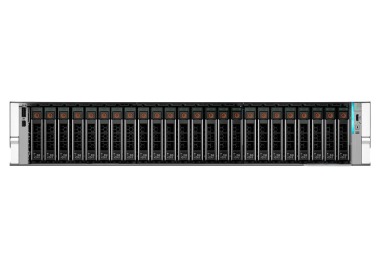
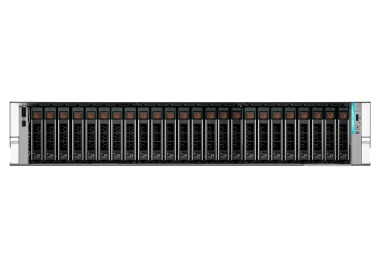
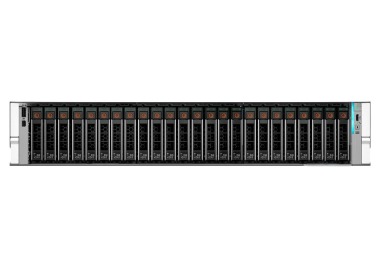
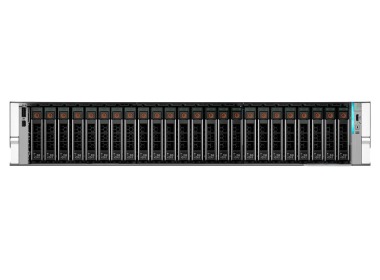
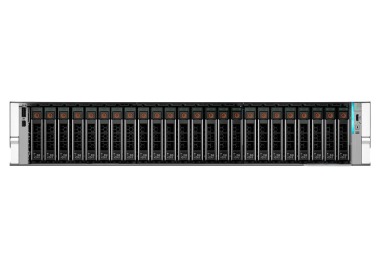
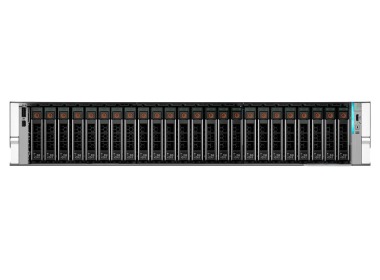
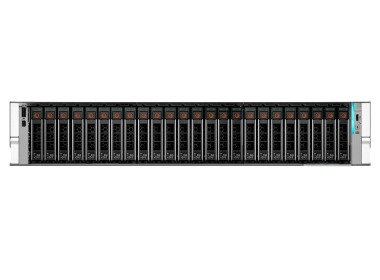
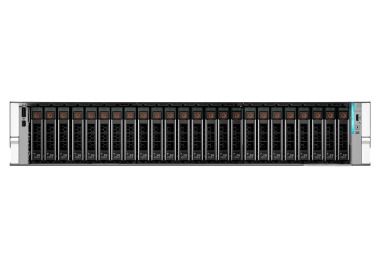
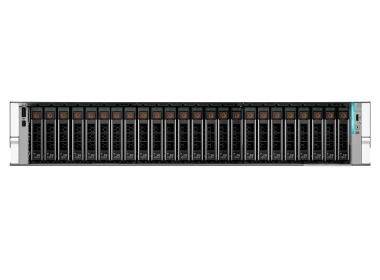
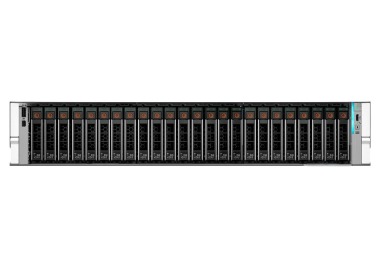
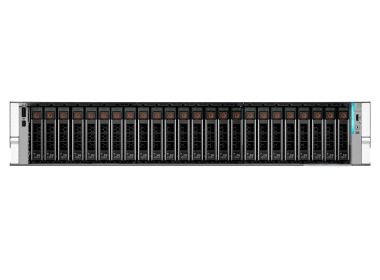
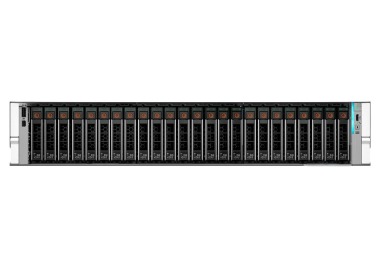
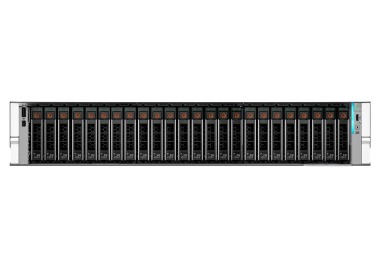
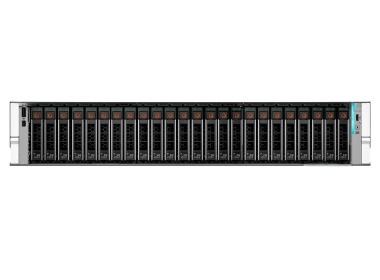
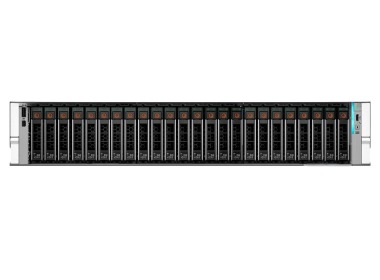
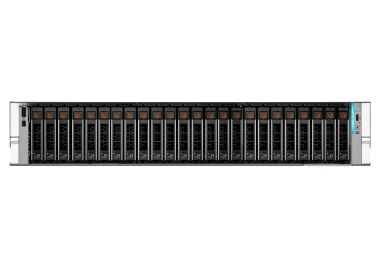
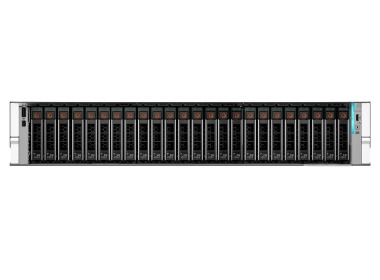
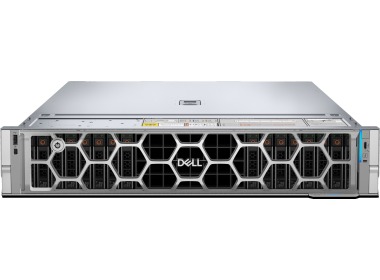
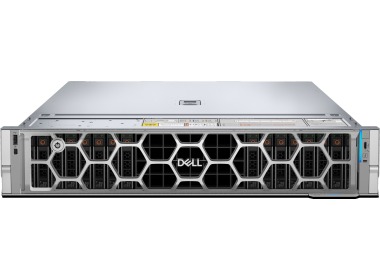
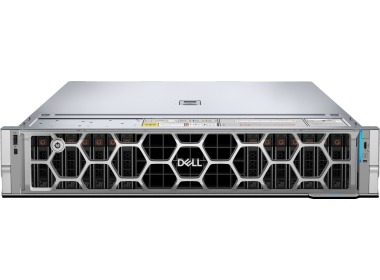
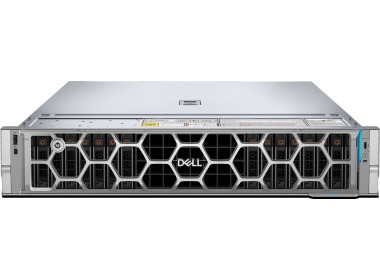
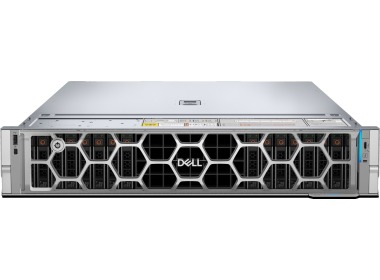
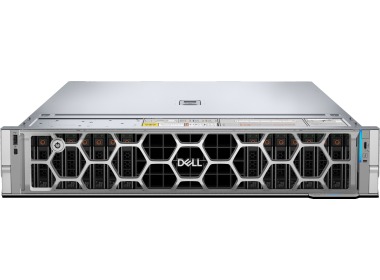
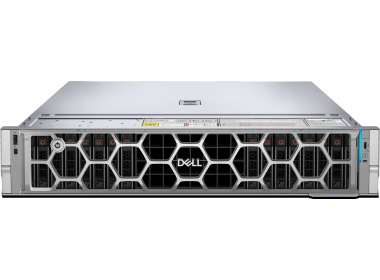
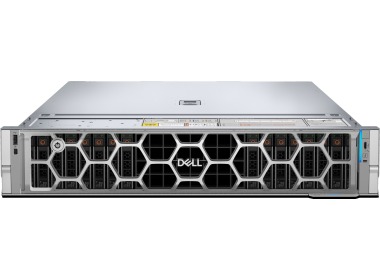
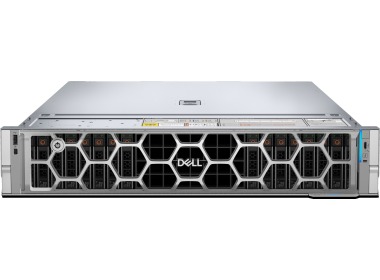
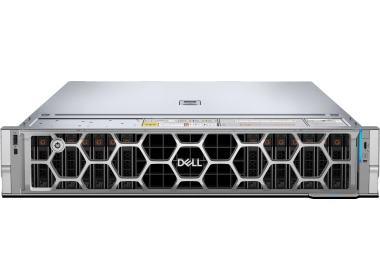
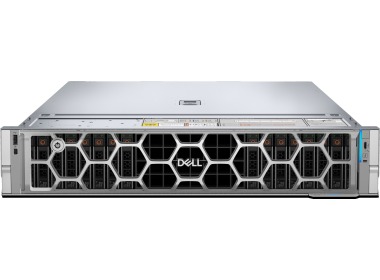
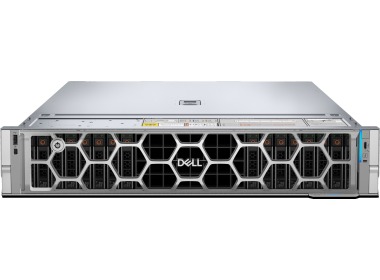
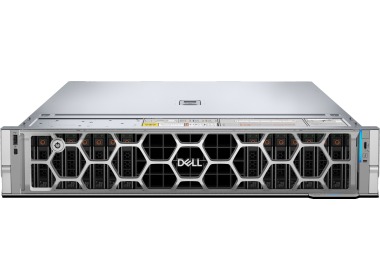
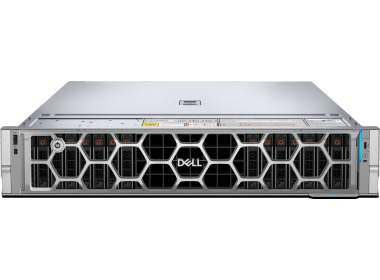
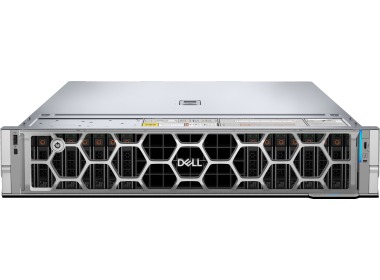
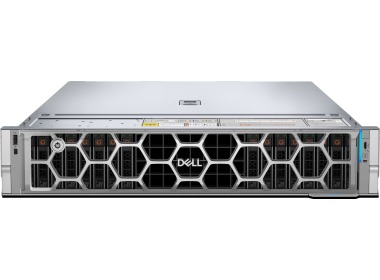
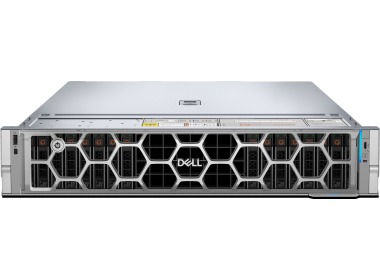
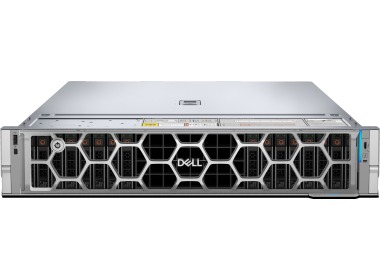
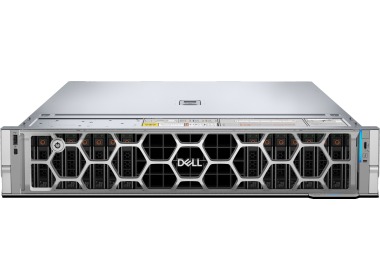
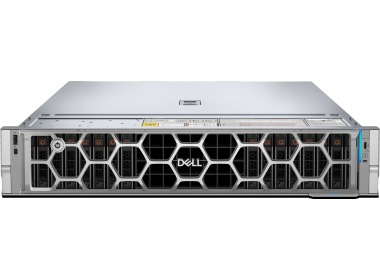
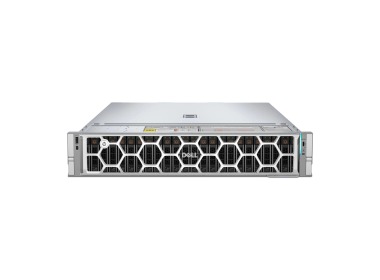
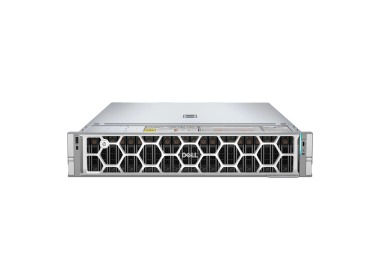
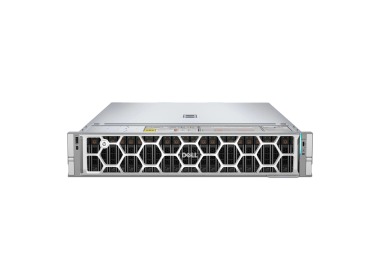
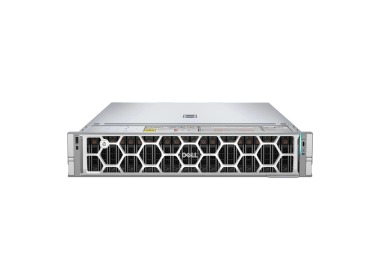
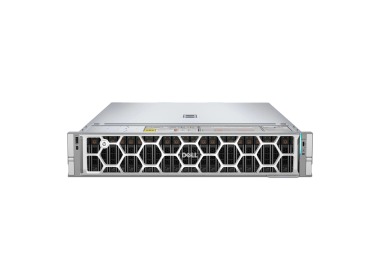
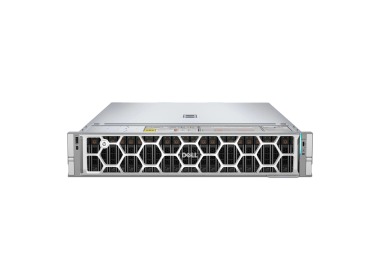
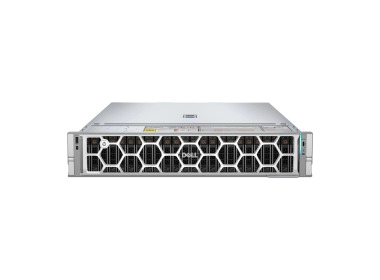
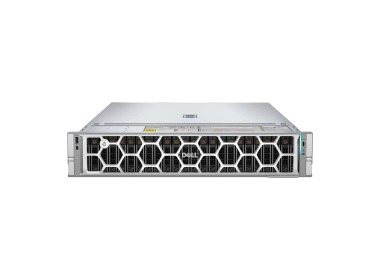
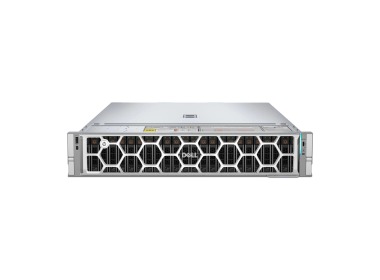
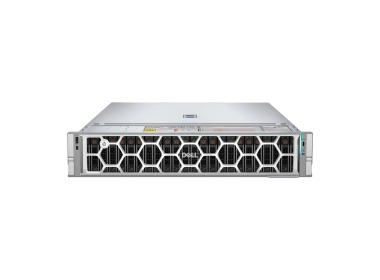
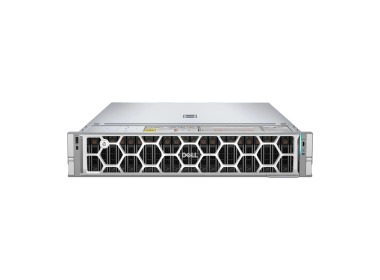
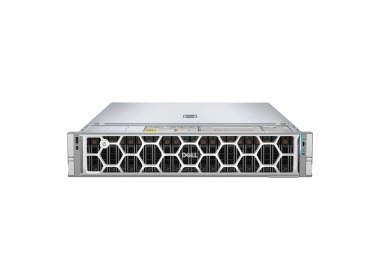
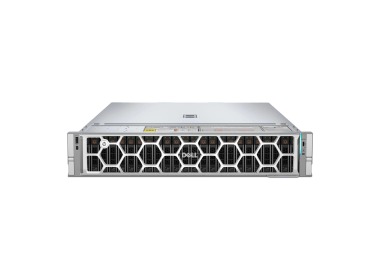
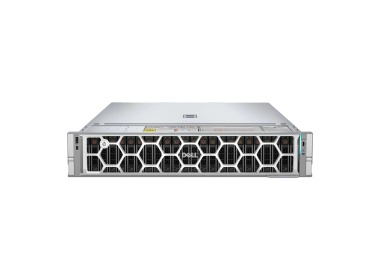
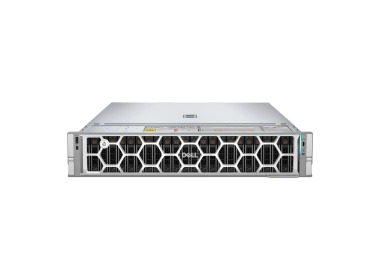
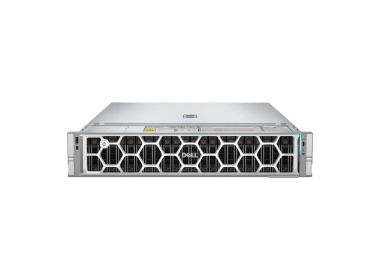
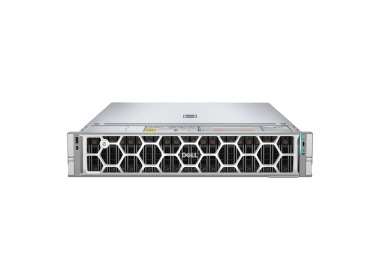
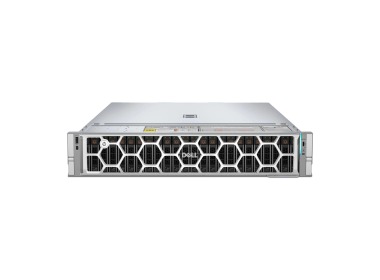
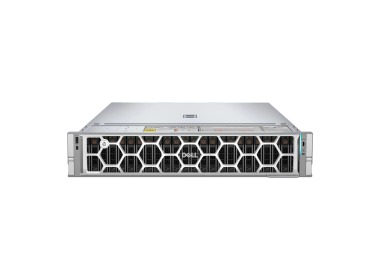
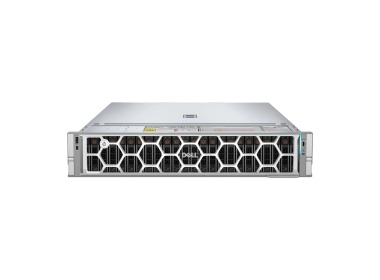
Dell G17 rack servers represent the 17th generation of PowerEdge in a rack chassis: R570 and R770 with Intel Xeon 6 processors, and R7715 and R7725 with AMD EPYC 9005. You get DDR5 memory, PCIe Gen5, and iDRAC10 management, and we configure it for your workload: virtualization, SQL databases, ERP, or GPU cards. Every configuration comes with a 36-month warranty.
What are Dell PowerEdge G17 rack servers?
G17 is the commonly used name for the 17th generation of Dell PowerEdge servers. You can recognize it immediately by the model number: Intel models are the R570 and R770, while AMD models are the R7715 and R7725, with numbers ending in 15 or 25. The full naming logic is explained in the article on Dell PowerEdge server naming conventions.
Rack means the server slides into a rack cabinet, alongside rack switches and UPS backup power. If the server is to stand in an office rather than a server room, check tower servers. The previous generation is available in Dell G16 rack servers, and the entire brand in the Dell servers category.
Key features of Dell G17 servers
The G17 platform is built on:
- DDR5 RDIMM memory at up to 6400 MT/s in the R570, R770, and R7725, which accelerates databases held in RAM and large virtualization hosts (plan expansion together with server RAM),
- PCIe Gen5 bus, which does not throttle network adapters at 25/50 GbE, graphics cards, or NVMe drives,
- EDSFF E3.S media, of which the R770 and R7725 can fit up to 40 at the front, alongside traditional 2.5" and 3.5" drives (how NVMe drives work is described separately),
- iDRAC10 with a remote console without an operating system, Redfish API, Silicon Root of Trust, secure boot, and system lockdown,
- PERC H365i, H965i, and H975i controllers, which we match to the number of drives and data type (see server RAID controllers).
You have two worlds to choose from. Intel Xeon processors are found in the R570 (single socket) and R770 (two sockets, up to a combined 288 E-cores), while AMD EPYC processors are in the R7715 (single socket, up to 160 cores) and R7725 (two sockets, up to 192 cores per processor).
Technical specifications: Dell PowerEdge R570, R770, R7715, and R7725
Below is a platform comparison. The exact parameters of a specific unit are determined in the server configurator, as the same model is available in dozens of CPU, RAM, and drive variants.
|
Parameter |
||||
|
Processors |
1× Intel Xeon 6 |
2× Intel Xeon 6 |
1× AMD EPYC 9005 |
2× AMD EPYC 9005 |
|
Max. cores |
144 (E) or 86 (P) |
288 (E) combined |
160 |
192 per processor |
|
DIMM slots / max. RAM |
16 / up to 4 TB (P-cores) |
32 / up to 8 TB |
24 / up to 6 TB |
24 / up to 6 TB |
|
RAM speed |
up to 6400 MT/s |
up to 6400 MT/s |
per configuration |
up to 6400 MT/s |
|
Front drives |
2.5", 3.5", up to 32× E3.S |
up to 40× E3.S |
2.5", 3.5", E3.S |
up to 40× E3.S |
|
GPU |
up to 3× 400 W DW |
per configuration |
per configuration |
up to 2× 450 W DW |
|
Typical use case |
ERP, SQL, GPU |
dense virtualization |
ERP, SQL, single socket |
virtualization, HPC, NVMe |
There is also the R7725xd, a storage-focused variant whose parameters we specify during configuration. The price range in the offering extends from approximately PLN 57,000 net for a single-processor R7715 with EPYC 9175F to over PLN 380,000 net for an R7725 with 1 TB RAM, so the budget and workload are determined together before you place an order.
|
Quick Windows Server licensing calculation (example) Windows Server is licensed per physical core, with a minimum of 16 cores per server and 8 per processor. An R7725 with two EPYC processors at 192 cores each means 384 licensed cores. An R7715 with a single EPYC 9175F has 16 cores at 4.2 GHz, so you pay for the minimum of 16. For ERP and SQL, clock speed often matters more than core count. |
How do Dell 17th generation rack servers differ from G16?
G16 runs on Xeon Scalable 4th and 5th generation and EPYC 9004. G17 transitions to Intel Xeon 6 and AMD EPYC 9005, with iDRAC10 replacing iDRAC9 and denser E3.S storage options. You therefore get more cores per socket and more memory in a single chassis, which allows you to consolidate several older servers into a single host.
It is worth noting that G17 can be more expensive than its performance alone would suggest. As we describe in the article on how much RAM for a business server, a 64 GB DDR5 RDIMM module has increased in price from approximately USD 255 to over USD 870 in half a year. If the workload does not require a new platform, check Dell G15 rack servers or read about the difference between a new and a recertified server.
Dell PowerEdge G17 use cases in a business environment
Virtualization. For hosts running VMware, Hyper-V, or Proxmox, the dual-socket R770 and R7725 make sense: many cores, up to 6–8 TB RAM, and 25/50 GbE networking.
ERP and SQL. For companies using Comarch Optima, Enova365, SAP, or Microsoft SQL Server, we recommend the single-socket R570 or R7715 with a high-clocked processor and RAID 10 on SSDs. Why this approach works is explained in the article on RAID in servers.
GPU and AI. The R570 accepts up to 3 cards at 400 W, the R7725 2 cards at 450 W. Our offering includes configurations with NVIDIA L40S 48 GB for inference, and for details see the AI servers category.
NVMe storage. The R7725 and R7725xd with dozens of E3.S media serve well as fast data repositories. When data needs to live outside the server, consider disk arrays.
Who is the Dell PowerEdge G17 rack server for?
Choose G17 if:
- you are planning hardware for 5–7 years and do not want to replace the platform after two,
- you are consolidating several older servers into a single virtualization host,
- you need GPU in a standard rack cabinet,
- you value iDRAC10 and hardware security features,
- you want a license-optimized configuration where you do not pay for cores you will not use.
A small office with 5–20 people usually does not need G17. A tower server or an older generation will be more cost-effective. Not sure? Configure a server with our engineer or call: +48 22 33 22 333.
FAQ
What does G17 mean in Dell servers?
G17 refers to the 17th generation of Dell PowerEdge servers. It is distinguished by Intel Xeon 6 and AMD EPYC 9005 processors, DDR5 memory, PCIe Gen5, and iDRAC10 management. We also use the name in categories, e.g., Dell G16 servers refers to the previous generation.
What is the difference between the Dell PowerEdge R570 and R770?
The R570 has one processor socket and 16 DIMM slots, the R770 has two sockets and 32 slots. The R770 supports up to 8 TB RAM and 40 E3.S media, making it suitable for dense virtualization. The R570 is sufficient for ERP, SQL, and individual GPU cards.
Intel Xeon 6 or AMD EPYC 9005 – which to choose for virtualization and SQL?
For dense virtualization, we choose EPYC, as it delivers up to 160–192 cores per socket. For SQL and ERP, a processor with high clock speed and fewer cores works well, such as the EPYC 9175F (16 cores, 4.2 GHz), since licenses are counted per core.
How much RAM should I choose for a G17 server?
Start from the requirements of your virtual machines or database, not from the platform maximum. DDR5 modules have increased in price significantly, so expanding later is less expensive than over-provisioning from the start. We calculate the configuration together with you in the configurator.
Is the Dell G17 server suitable for AI and GPU computing?
Yes. The R570 accepts up to 3 cards at 400 W, the R7725 up to 2 cards at 450 W. Our offering includes configurations with an NVIDIA L40S 48 GB card for inference, and for model training we select a platform with a larger number of GPUs.
G17 or G16 – which is more cost-effective?
G17 provides more cores, faster memory, and iDRAC10; G16 is typically less expensive to purchase. If the workload fits within G16 capabilities, there is no need to pay for a new platform. Compare both options in the Dell G16 rack servers category.