/ PLN
/ PLN
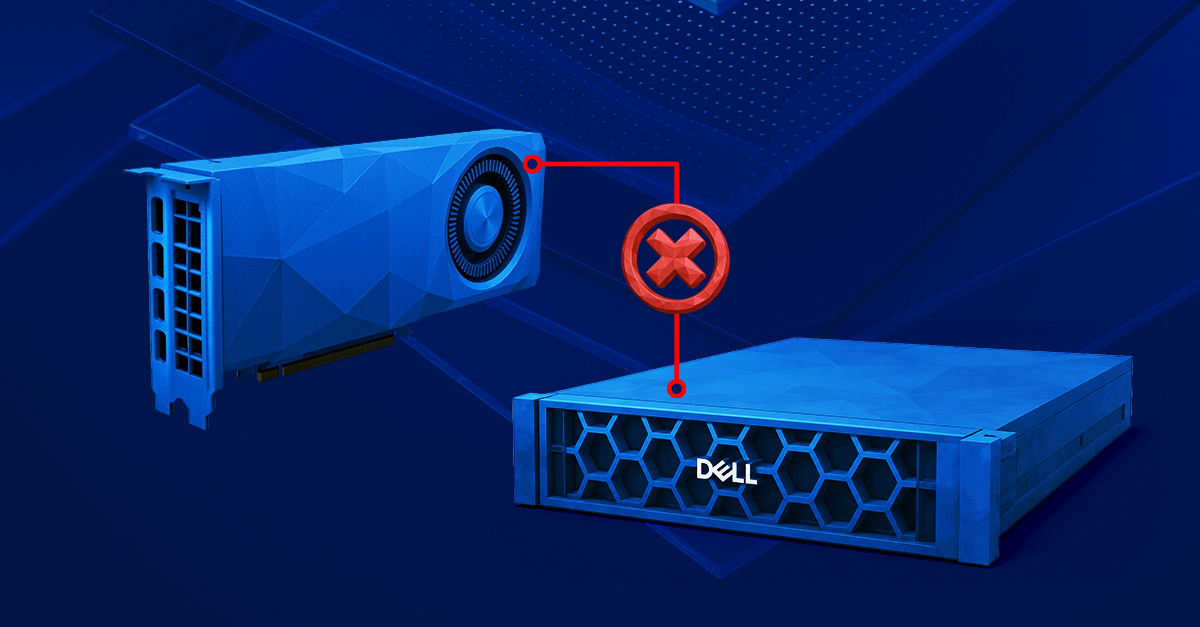
No GPU access for next 12 months? That's not technical problem – only decision how you want to run project. Because today company with best equipment doesn't win, but one that can launch AI faster than others, even on less ideal infrastructure. And this is where real options start – not "textbook" ones, but ones that work in practice.
GPU lead time is no exception today – just something you must factor into IT strategy
If you can't wait 12 months for GPU – you don't wait. You change approach. This is exactly moment when decision stops being technical and becomes business. Lead time at 40-50 weeks isn't today anomaly, just standard in data-center GPU segment. And importantly – affects not just card itself but entire platform: server, memory, power, cooling and integration.
This means one thing: if you plan AI project "for specific configuration", you can simply miss deployment window. And then come real consequences:
- delayed product market entry,
- broken budget and roadmap,
- lost competitive advantage.
And here comes change in thinking. Instead of asking "when will GPU X be available", you start asking: what can I run project on right now so I don't stand still. This is exactly point where companies start moving faster than competition – not because they have better hardware, but because they don't wait.
Wait 12 months or launch project now? Here companies really lose most
Biggest cost in AI isn't hardware. Biggest cost is time you won't get back. If project has potential to generate revenue or optimize processes, every month delay works against you.
Instead of looking at difference between L40S and A100, better look at something simpler: does model work and does it deliver value. Because in practice:
- model running today on "sufficient" GPU,
- beats model running year later on "ideal GPU".
This is moment many companies get stuck. They wait for specific configuration instead of launching MVP. Then turns out competition:
- already collected data,
- already optimized model,
- already serves customers.
If project makes business sense, answer is quite simple: better launch it on hardware available now, even if means compromises. Because AI develops iteratively – not in one "ideal deployment".
No H100? You take what exists – how sensible hardware compromise looks
Lack of top-tier card doesn't mean project stops. It means selecting configuration that actually gets job done, even if not benchmark-top.
In practice very often looks like:
- instead of H100 → you take L4, A40 or even T4/V100,
- instead of 4 GPUs → you start with 2-3 cards,
- instead of full training → you start with inference or fine-tuning.
Most AI projects don't need maximum power at start. Needs stable environment that:
- allows testing,
- gives repeatable results,
- can scale later.
That's why configurations like:
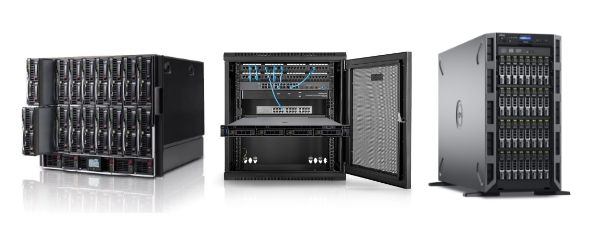
- Dell R7425 + 3× L4 (24 GB VRAM),
- Dell R750xa + A40 or A100 (if available),
are so popular – because they offer real compromise between availability, price and performance. And most importantly – let you launch project right away.
Recertified equipment is not Plan B – often fastest path to AI launch
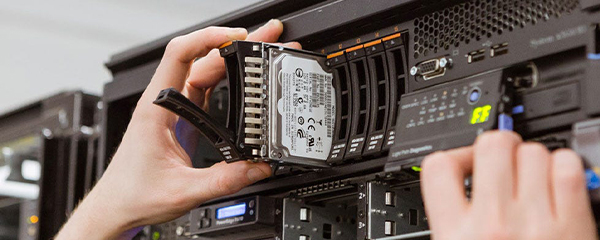
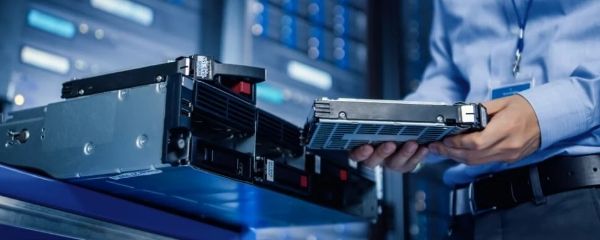
If timeline matters more than "latest generation", recertification stops being alternative and becomes first choice. Because such equipment already exists – comes from demos, canceled orders or labs – and ready for redeployment.
Important thing is we're not talking about "used ad classifieds" but equipment that:
- passed load testing (burn-in),
- has verified component compatibility,
- covered by warranty up to 36 months.
And now key thing – availability. Where you wait months for new GPU, recertified configurations:
- are available immediately,
- have ready configuration (RAID, firmware, iDRAC/iLO),
- can deploy practically right away.
If goal is launching AI, not chasing benchmarks, such choice often makes more sense than waiting for "ideal setup".
In this context recertification isn't quality compromise. It's optimization of deployment time and cost that often delivers better business result than newest equipment bought too late.
GPU rental buys time but doesn't solve problem – when makes sense, when doesn't?
If need power "right now", GPU rental or cloud is simplest way around hardware queue. Launch instance, configure environment and work in hours. No waiting, no investment, no hardware deployment – everything happens fast.
Only works well in specific scenarios:
- model testing, proof of concept,
- short training,
- seasonal loads.
Problem starts when project becomes continuous. Then:
- costs rise every day,
- environment stops being predictable,
- vendor dependency appears.
Worth treating rental as time buffer, not target infrastructure. It's tool letting you launch project or "survive" hardware shortage period – but doesn't replace own environment if AI is long-term.
Project architecture change instead of hardware change – where you can really win time?
In many cases biggest acceleration comes not from stronger GPU but from changing project approach itself. This is moment when instead scaling hardware, you start scaling logic.
Options more than appears:
- instead of training from scratch → fine-tune existing model,
- instead of large model → smaller but better optimized,
- instead of real-time → batch processing.
Result? Lower VRAM requirements, fewer GPU hours and faster deployment.
This especially important because many AI projects start from assumption "need maximum power". Only later turns out:
- model can be optimized,
- data can be processed differently,
- pipeline can be divided.
Architecture change often delivers more than hardware change – without additional costs.
Phasing instead of "all or nothing" – how to launch today and scale when hardware available
Most practical approach is breaking project into phases. Don't build entire infrastructure at once, start from what's available – and develop environment as hardware becomes available.
Typical scenario looks like:
- start on smaller configuration (e.g. 1-2 GPUs),
- develop model and pipeline,
- expand to larger environment,
- eventual migration to target hardware.
This way:
- you don't freeze budget for year,
- you don't block team,
- you have working environment from start.
This approach works especially well with AI because most projects develop iteratively anyway. Model working today always better than model that doesn't exist yet, even if year later would be "better".
How to pick right path – decision depends on time, not just budget
No single right answer but can simplify to few real scenarios.
If:
- project must launch immediately → take available AI server or GPU rental,
- you have limited budget → recertified equipment gives best balance,
- you're doing pilot → smaller configuration suffices,
- planning long-term → target server + phasing.
Biggest mistake is trying find one solution "for everything". In practice mixed approach wins – matched to project stage.
And here we reach key principle: you don't pay just for hardware – you pay for time without it. This often changes entire thinking about investment.
FAQ
Really have to wait year for GPU?
Yes, in data-center segment lead time can reach even 40-50 weeks, especially for top models.
Worth waiting for specific card (e.g. H100)?
Only if project isn't urgent. Most cases better launch solution on available hardware and develop it over time.
Do older GPUs (e.g. A40, V100) still make sense?
Yes. Many applications get sufficient performance, especially inference and fine-tuning.
Will GPU rental replace own server?
No – temporary solution. Works for testing and short projects but becomes expensive with steady load.
Is recertified server safe choice?
Yes, if post-tested and warranted. Often fastest way to launch AI environment.
How not to burn budget with lead time?
Don't wait for perfect hardware. Better start smaller configuration, launch project and scale later.
What matters more today – hardware or deployment time?
In most cases time. Because it determines when project starts generating value.