/ PLN
/ PLN
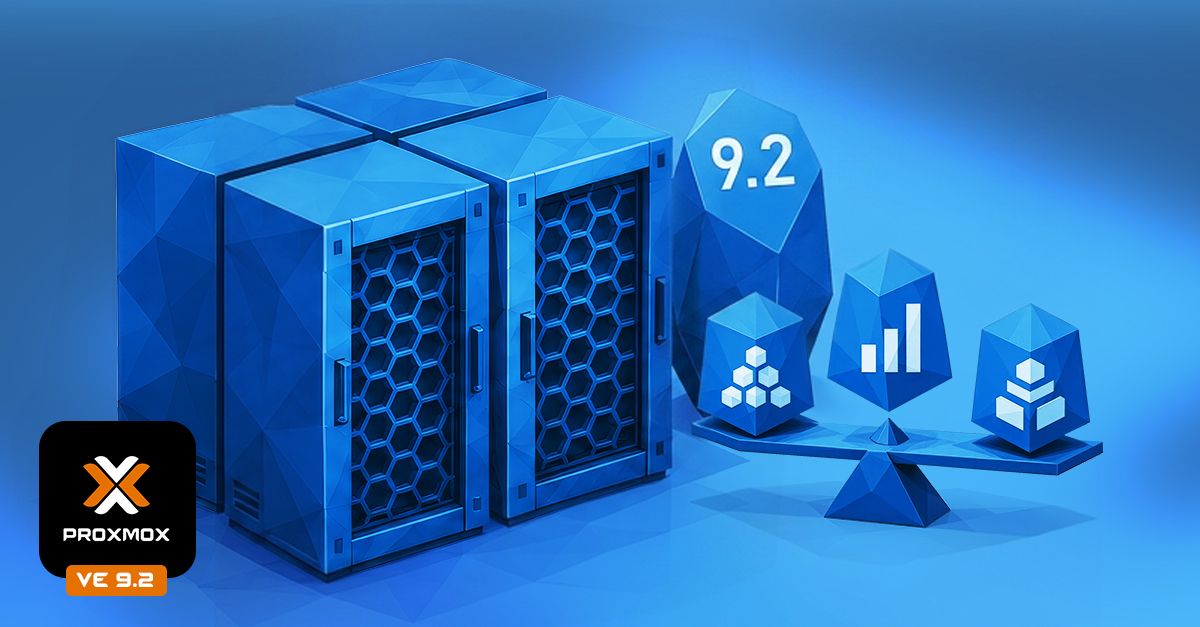
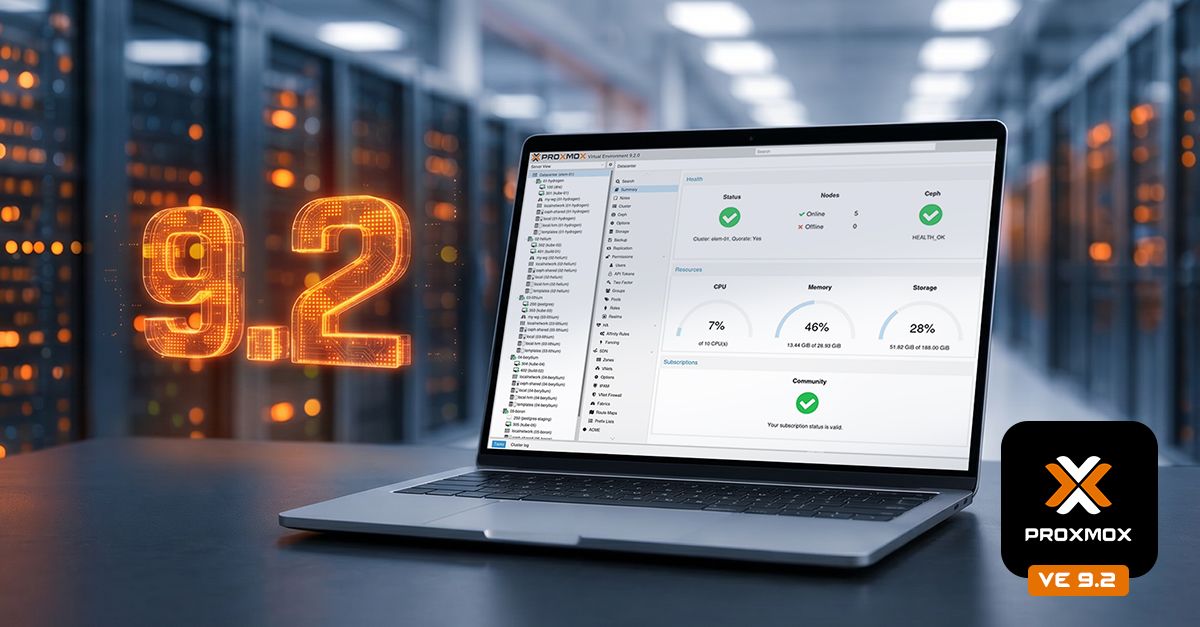
The new version of Proxmox Virtual Environment 9.2 is not just another point on the platform's development timeline. For teams responsible for virtual infrastructure, it is an update that clearly shows the direction in which the entire Proxmox ecosystem is evolving: more automation, greater predictability of cluster operations, and better control over what is most important in production environments: stability, security, and business continuity.
With such releases, it is easy to focus solely on the list of new features. Meanwhile, in practice, a more important question is: what do these changes mean for the daily work of administrators, architects, and those responsible for business maintenance? It is precisely from this perspective that we should look at Proxmox VE 9.2.
A Step Towards a More Intelligent Cluster
One of the most important new features is the Dynamic Load Balancer for the Cluster Resource Scheduler. This is a solution designed to help better distribute the load across the cluster and reduce the risk of situations where individual hosts become a bottleneck for the entire environment.
In practice, this is especially crucial where the infrastructure operates in continuous availability mode, and the balance between performance, security, and resource planning directly impacts the operation of business systems. The administrator not only gains greater control over the cluster's behavior but can also reduce the need for manual intervention in situations that previously required constant operational attention.
This is an important signal: Proxmox is increasingly developing mechanisms that support the automation of infrastructural decisions, rather than just "after-the-fact" administration.
Safer Maintenance Windows and Better Work Organization
The second element that deserves special attention is the new Disarm/Arm workflow. At the level of administrative practice, this is a very valuable improvement as it relates to planned maintenance work in HA environments.
Anyone who manages a production cluster knows that the update itself is not the biggest challenge, but rather how it is carried out. You have to ensure that offloading the node, preparing it for work, and re-integrating it into the cluster is done in a controlled, predictable, and safe manner. This is exactly where the new Proxmox approach can translate into a real reduction in operational risk.
In practice, this means less room for procedural errors, better repeatability of actions, and greater confidence when planning changes in an environment that must remain available to users and critical systems.
SDN, WireGuard, and BGP: Greater Flexibility in Network Design
Another area that has been significantly expanded in Proxmox VE 9.2 is SDN. Adding support for WireGuard and BGP opens up new possibilities for teams designing more complex network topologies who want to do so directly from the virtualization platform level.
For many organizations, this is an important shift because the network ceases to be a separate, hard-to-manage infrastructure component and becomes an integral part of the virtual environment. This, in turn, facilitates the construction of modern architectures better suited to distributed resources, hybrid environments, and security requirements.
WireGuard increases the ability to create lightweight and secure connections, while BGP provides greater flexibility in routing design and segmentation. From an infrastructure architect's perspective, this combination can be highly practical when expanding or standardizing an environment.
Updating the Platform's Foundations
It is also worth noting the update of key system components, including QEMU, LXC, and ZFS, as well as the transition of the underlying system to a newer version of Debian. Such decisions are not always the most "visible" at first glance, but they often determine the quality of the entire platform's operation in the long term.
New versions of components usually mean not only fixes and improvements but also better compatibility, stability, and the further development of features used by production environments. That is why updates of this type should be analyzed not as isolated novelties, but as part of a broader infrastructure maintenance strategy.

What Does This Mean for Companies Using Proxmox?
For organizations using Proxmox VE, the most important thing is not just the release of a new version, but the answer to whether and how it fits into the current environment architecture. In some cases, this will be a natural step forward. In others - a signal that it is worth rethinking the cluster expansion model, maintenance policy, or the way networks and service processes are designed.
Proxmox VE 9.2 clearly shows that the platform is evolving towards more mature management of production environments. From a business perspective, this is good news because it means greater flexibility, more automation, and potentially lower operational costs for infrastructure maintenance.
Regardless of which of these groups you position yourself in, our engineers, knowledge, and experience remain at your disposal. At Hardware Direct, we have been supporting clients who build their environments based on Proxmox for years. As an official partner, we also provide software subscriptions from this manufacturer, which allows us to provide not only hardware and consulting but also full support in implementing virtual environments.