 /
PLN

Server configurator for enterprise virtualization – how to match performance to your VMs?
Virtualization entices with simplicity – "throw VMs on the host and it works". In practice it works only when cores, RAM and storage were calculated before you clicked the VMware installation. A server for multi-machine environment is not a "bigger computer". It's a platform meant to carry a dozen, sometimes dozens of systems simultaneously – with different load profiles, different memory appetite and different I/O needs. If you're planning to implement VMware, Proxmox or Hyper-V in your company – start with power.
How much total vCPU do you really need to configure a virtualization server? Before clicking "add second processor", calculate this properly
First calculate the total vCPU of all planned machines, only then select physical cores – reverse order ends in over-sizing or host overload.
- Conservative production start: CPU overcommit 1:1 to 1:2 (vCPU : logical thread).
- Physical server processor 16c/32t provides 32 logical threads which hypervisor distributes among VMs.
- Too high overcommit = rising CPU Ready and VM wait for core access.
- New VMs start from 1-2 vCPU, you increase only after load analysis.
Sounds simple, but this is where the mistake is most often made. You see it regularly: company plans 15 VMs, each "just in case" gets 4 vCPU because "better to have more". Suddenly there's 60 vCPU on a host with 16 cores. Hypervisor scheduler starts juggling threads, CPU Ready appears, applications respond slower, and in vCenter everything "seems" fine. Virtualization doesn't like over-allocation.
Good practice is start small and scale up – minimal allocation, monitoring and then correction. In many SMB environments 1 powerful CPU with 12-16 cores at sensible clock speed comfortably handles a dozen lightweight VMs. Second processor makes sense when machine count grows dynamically or loads like SQL, VDI or analytics systems appear. Calculate first. Expand later.
Cores vs clock speed – why "more" doesn't always mean "better" in VMware environment?
In virtualization it's about balance between core count and single-core performance – core density alone doesn't guarantee better VM operation.
- Hyper-Threading / SMT means 1 core = 2 logical threads, but this doesn't double power.
- Too many idle cores at low clock speed increase scheduler work.
- One VM with 16-32 vCPU can run slower than the same with 4-8 vCPU.
- Topology "Sockets × Cores" matters for NUMA and how guest system sees CPU.
This is where specs stop being obvious. A processor with huge core count looks impressive, but if most of your VMs are application servers, AD, files, monitoring – often more important is stable, higher single-core clock speed. Virtualization distributes load. If one machine needs to sync many threads at once, too high vCPU allocation can… slow it down, because scheduler waits for all logical threads to be free simultaneously.
That's why planning VMware power isn't about "maximum core count". It's about matching cores to real workload profile. Otherwise budget goes into CPU, and real bottleneck turns out to be RAM or storage. And that's a completely different conversation.
Virtualization server configuration: 128, 256 or 512 GB RAM? See how much memory a dozen VMs really "eat"
In practice it's RAM, not CPU, that most often limits the number of virtual machines on a host.
- AD, DNS, small services – 4-8 GB RAM.
- File server, business applications – 8-16 GB RAM.
- Small SQL / ERP – 16-32 GB RAM (more with larger databases).
- Hypervisor usually needs 10-20% RAM for itself.
- Production environments target 1.0-1.3× vRAM vs physical memory.
Host with 128 GB RAM comfortably handles a dozen lightweight VMs without aggressive overcommit. At 256 GB comfort starts – 20-40 machines with mixed profile while maintaining safety margin. 512 GB and more is already dense environments: VDI, several databases, reporting systems.
Memory overcommit is technically supported, but if you overdo it, ballooning, compression and swapping appear. And swapping in production environment means one thing – service latency spikes. That's why experienced admins usually stick close to physical memory with critical systems, treating overcommit as buffer, not foundation.
In short: if you're wondering whether 128 GB suffices, answer one question – how much RAM will your VMs use during peak hours, not at night. This value should determine host configuration. You can still "stretch" CPU. You can't stretch RAM.
NVMe under datastore – when storage becomes the cluster bottleneck?
If VMs start responding slower despite CPU and RAM headroom, storage is almost always the bottleneck – and with many virtual machines random I/O kills it.
- NVMe PCIe 4.0/5.0 – even 1 million+ IOPS, latencies of tens-dozens of µs
- SSD SATA/SAS – usually 100-200k IOPS, latency measured in hundreds of µs
- HDD 10K/15K – latency in few ms and disaster with many concurrent operations
- 4-8 NVMe disks in RAID 10 as local datastore is today sensible production minimum
- SDS (vSAN, Ceph) lets you combine local NVMe into efficient and redundant cluster
In multi-machine environment each VM generates its own small, scattered operations – logs, indexes, system files, snapshots, backups. This isn't sequential large file copying. This is continuous, random traffic. And that's exactly why disk drives, and even some older SSDs, start to "choke".
In practice, 4-8 NVMe in RAID 10 gives not only enormous throughput but also stability during peaks – system updates, snapshots, backups or mass VM startup after host restart. With small 2-3 node clusters, local NVMe + Software-Defined Storage (vSAN / Ceph) model works very well – you get both local disk performance and redundancy between hosts.
EPYC or Xeon Gold? VM density versus single-core and compatibility – choose consciously
Processor platform choice determines how many VMs you can actually fit on one host and how the per-core computational cost will look.
- Dell PowerEdge R7615 (1× AMD EPYC) – up to 128 cores per socket, DDR5 4800 MT/s, PCIe 5.0
- Dell PowerEdge R7625 (2× AMD EPYC) – even greater density, even several TB RAM, aimed at VDI and large clusters
- Xeon Gold – strong single-core performance, very mature ecosystem and compatibility
- EPYC – more memory channels and PCIe lanes = higher RAM and storage throughput
If your goal is maximum VM density on one host and good TCO per thread, EPYC in R7615 / R7625 models today offers huge flexibility. High core count, many memory channels and modern PCIe 5.0 mean you can pack the environment densely without I/O bottlenecks.
On the other hand Xeon Gold is still a very strong option where single-core performance matters and broad compatibility with specific storage or HCI solutions. In some application environments higher single-core clock gives better results than core count alone.
It's not "better-worse" choice. It's: are you building a host for maximum VM density or more classic, balanced loads. That's exactly why CPU topic fits well in the configurator – to see the difference in core count, RAM and NVMe at specific budget.
One host or 2-3 node cluster? If you're thinking HA, start with this decision
Virtualization without high availability works – until first serious host failure.
- 2-node cluster + witness – sensible HA minimum
- 3-node cluster – fuller redundancy and service comfort
- Automatic VM migration (HA / failover) after host loss
- vSAN / Ceph / Storage Spaces Direct – data replication between nodes
- Planned work without downtime capability
Single host is cheaper and simpler. However, if accounting, ERP, CRM or production system run on these VMs, one point of failure is real downtime risk. 2-node cluster with additional witness already lets you build basic HA – if one host fails, VMs start on the other.
3-node cluster offers more flexibility. You can take one node down for service and still maintain redundancy. With local NVMe and SDS you get performance and failure resilience without building elaborate SAN infrastructure.
So if you're planning virtualization "for real", the question isn't whether HA is needed. The question is: what downtime level can you accept? The architecture starts from this answer.
Check your configuration in practice!
Instead of guessing how many cores and NVMe you need, test different options in our server configurator.
Select:
- platform,
- number of cores and threads,
- 128-512 GB RAM and more,
- NVMe configuration for datastore,
- single host or 2-3 node cluster variant.
In a few minutes you'll see how cost and scalability change with different scenarios. If you're unsure – better to verify the design before deployment than after first host overload.
FAQ
Is one host enough for small company?
Yes, if you accept no HA. With critical production systems, at least 2-node cluster is recommended.
Can CPU be heavily overcommitted?
Technically yes, but for production stay with 1:1-1:2 and increase the ratio only after monitoring.
Does RAM or CPU limit host faster?
In most SMB environments, it's RAM that's the first limit, not CPU.
Is NVMe mandatory under VMware?
With a dozen or more VMs – practically yes. Random I/O quickly exposes HDD and older SSD limitations.
EPYC or Xeon Gold – what to choose?
If counting maximum VM density – EPYC. If compatibility and single-core matter more – Xeon Gold. Decision depends on workload profile.
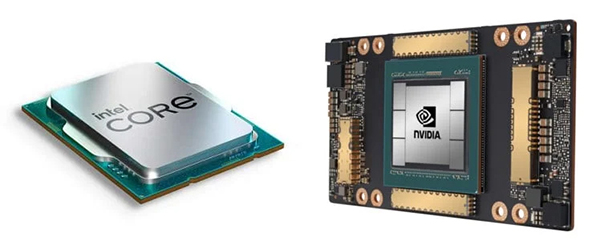
AI Servers – which gpu and cpu are best for deep learning workloads?
Training large-scale AI models is far beyond the capabilities of ordinary desktops.

How does AI inference work, and which server ensures top performance?
From air conditioning to access control - comprehensive requirements for a secure server room
A server room is more than just a space for rack cabinets and blinking LEDs

Server virtualization in practice – how to increase flexibility without investing in new hardware?
Server virtualization is a method to maximize the efficiency of your existing infrastructure

System administrator – the foundation of secure and reliable infrastructure. What does a server admin actually do?
Without them, nothing works as it should.
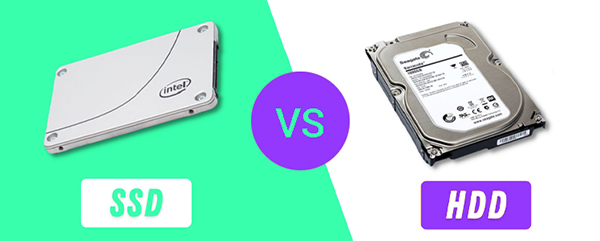
SSD or HDD in the data center – what really pays off with large data volumes?
SSD or HDD

Cluster computing – what it is, how it works, and why it scales better than traditional servers
Tired of overloaded servers that can’t keep up with your company’s growth?

AI server cooling - how to keep temperatures under control at high TDP?
AI is not only models and data - it is also heat.
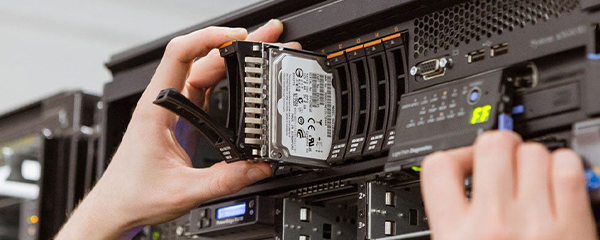
Hybrid drives in servers – real savings or unnecessary complication?
Hybrid drives in servers

Dell Power Edge server naming convention
Naming convention of Dell Enterprise products explained
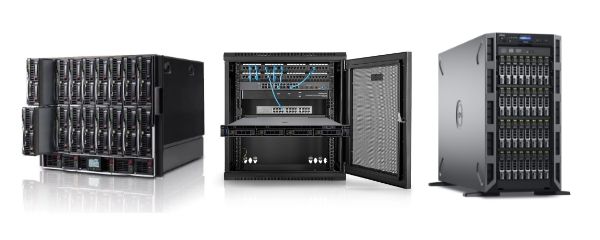
How to choose a server
See our guide to server types. Their strengths and weaknesses.

Cybersecurity Optimization in Accordance with NIS2 Directive
Read whether the NIS 2 directive applies to your bussines.
NVMe drives: how do they work and why should you choose them?
Learn how an NVMe drive works and what are the advantages of using it in modern servers.
New server or recertified server – which one to choose?
See what server renewal is all about and what benefits it brings to your organization.

Advantages of On-Premise IT hardware over cloud solutions
Advantages of On-Premise IT hardware over cloud solutions

New vulnerability "regreSSHion" in Dell iDRAC modules
Attention! We are reporting a critical security issue that may impact your server.

How to effectively prevent DDoS attacks
Learn how to effectively prevent DDoS attacks
RAID – Data Protection or Unnecessary Expense?
Are RAID arrays real data protection or an unnecessary expense?
How to effectively manage power in a server room?
Do you know how complex energy and power management can be in a Data Center ecosystem?

DNS server not responding? See what to do before you lose your patience.
DNS server not responding? See what to do before you lose your patience.
SNMP protocol – what do you need to know before you start?
What is SNMP and why is it important to know before implementation?
IOPS – The Unsung Hero of Performance. Does Your Drive Have It?
In this post, you will learn what IOPS really means and how to measure it.
TBW – what does this parameter mean and why does it affect the lifespan of an SSD?
TBW (Total Bytes Written) is an indicator that tells you how much data you can write to an SSD over its lifetime.
High Bandwidth Memory – what is it and why do AI engineers love it?
HBM, or High Bandwidth Memory, is a technology that has become an indispensable component of equipment used in AI.
ECC and non-ECC in IT infrastructure – when must performance give way to reliability?
ECC or non-ECC RAM – a decision that can affect the stability of the entire infrastructure.

How to Understand Networking in the Context of Modern Server Environments?
A computer network is more than just cables and routers – it is the foundation of every company's IT infrastructure.
Intel Processors in Servers and Workstations – How to Decipher Markings and Choose the Right Series
Choosing a processor for a server or workstation is not just about the number of cores.
Remote Server Access Even Without an OS? Get to Know IPMI and Its Capabilities
Remote access to the server, even when the system is down? IPMI makes it possible – without any tricks.

Hardware Direct is Now an Official Proxmox Partner
Hardware Direct is proud to announce that we have become an authorized partner of Proxmox Server Solutions.

Global AWS Outage: Technical Post-Mortem, Industry Patterns, and IT Architecture Takeaways
Monday, 20 October 2025, will go down in history as the day when a significant part of the internet simply stopped working.
Proxmox: Why choose an open-source solution when building server infrastructure?
Discover why Proxmox VE is a strong alternative to VMware: enterprise features with no license fees, flexible subscriptions and significant savings for your IT infrastructure.
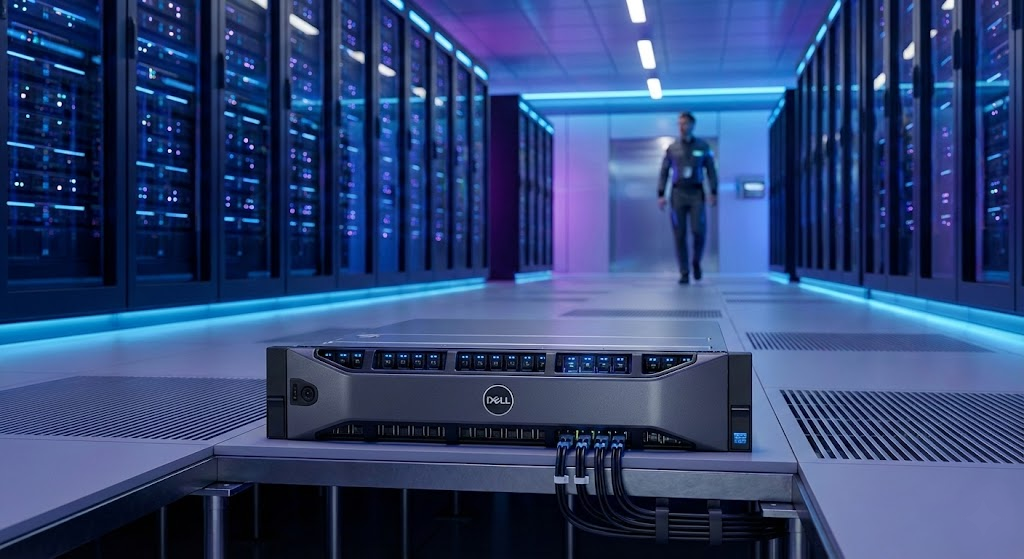
Active-active in disk arrays – why is it so difficult to explain clearly what it really means?
When users talk about controllers in active-active arrays, they assume that both controllers work simultaneously and handle I/O traffic at the same time. In practice, this is not always the case.
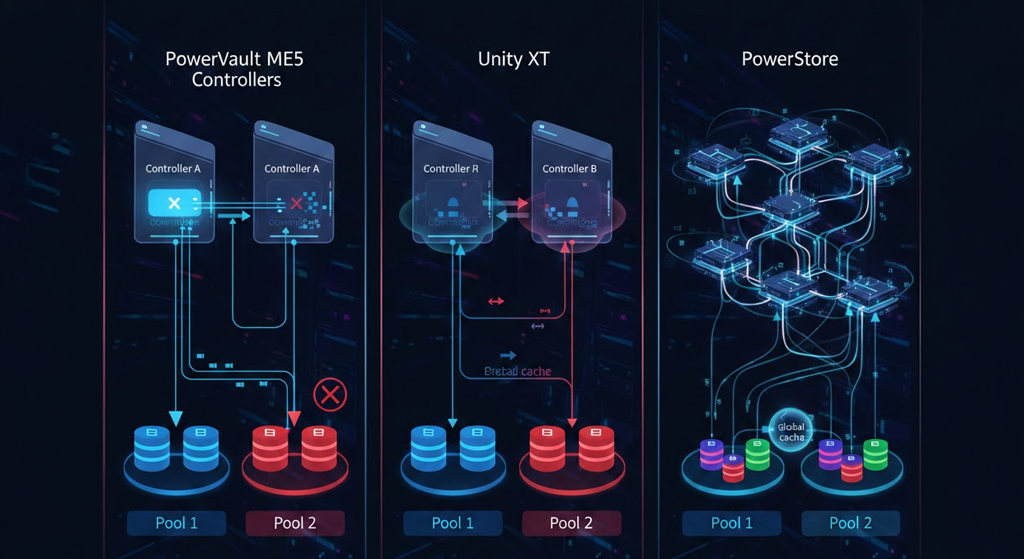
Dell PowerStore: 7 Game-Changing Facts for Your Infrastructure
Modern IT departments, finding themselves in the operational trap of sudden data growth, can easily solve this problem.

Hardware Direct Becomes a Dell Technologies Gold Partner
Hardware Direct is a Dell Technologies Gold Partner offering Dell PowerEdge servers, storage, and IT infrastructure solutions for businesses.

Overcoming Enterprise Hardware Supply Bottlenecks
Discover why enterprise hardware lead times are stalling and how Hardware Direct helps expedite server configurations to meet your project deadlines.
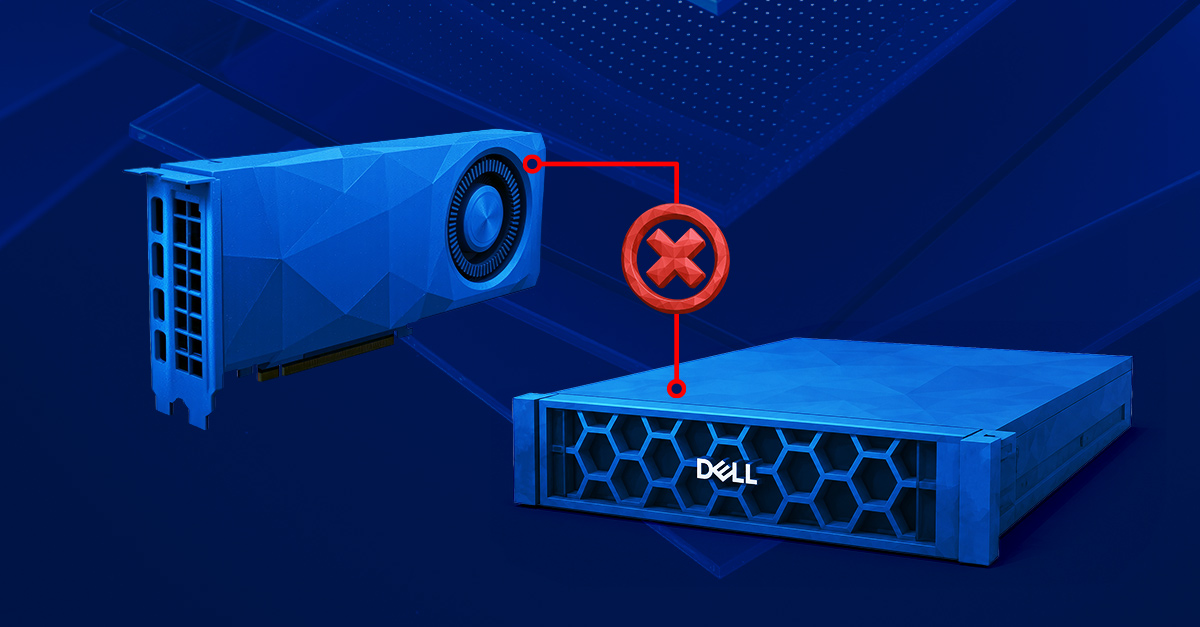
NVIDIA RTX PRO 6000 Blackwell in Dell PowerEdge R750 – Why Specifications Clash with Practice?
NVIDIA RTX PRO 6000 Blackwell in Dell PowerEdge R750 – Why Specifications Clash with Practice? (Our Tests)
Proxmox VE 9.2 Release: Analysis of Key Changes for High Availability Clusters
The new version of Proxmox Virtual Environment 9.2 is not just another point on the platform's development timeline.
R7425 as an AI server – when does AMD EPYC have an advantage over Xeon?
Dell PowerEdge R7425 is one of those servers that looks "just solid" on paper, but when you see it with AI, that's where its real advantage becomes clear.
Refurbished Dell server for AI – when is it worth choosing over a new one
A few years ago, a recertified server was mainly associated with "cheaper used equipment". Today the situation looks completely different.
R750xa / R760xa – servers for training LLM models in your company? Absolutely!
A year ago, many companies assumed that local LLM was just a game for the biggest players.

C4140 and DSS8440 – do older GPU platforms still make sense for AI, or are they just stopgap hardware?
C4140 and DSS8440 are no longer the "hottest" GPU platforms on the market – but that doesn't mean they've stopped making sense.
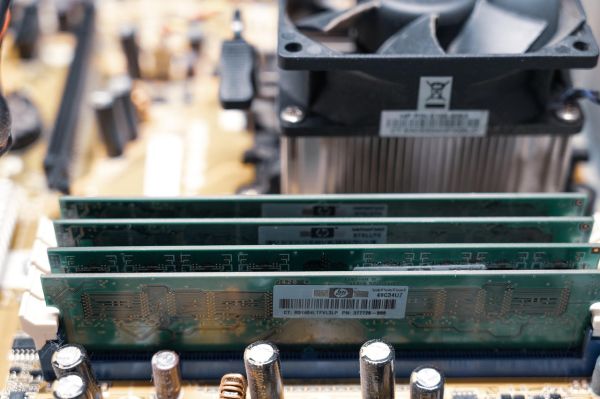
128 GB, 512 GB or 2 TB of RAM – how much memory does an AI server really need?
With AI servers it's very easy to fall into thinking: "the more RAM, the better".

Is it cheaper to buy two budget GPU servers than one high-end one?
When buying an AI server, it's very easy to conclude that the best approach is to go for the "most powerful possible configuration" right away.

How to configure a server for training computer vision and video models?
Image and video AI models can overwhelm a server much faster than classic text-based LLMs.
What GPU server do you need for a VFX studio and 3D rendering?
3D rendering can very quickly show whether infrastructure was built "to spec" or for real studio work.
Hybrid model: inference locally, training in the cloud – how to set it up?
More and more companies today reach a point where the classic "throw everything to the cloud" approach stops making sense.
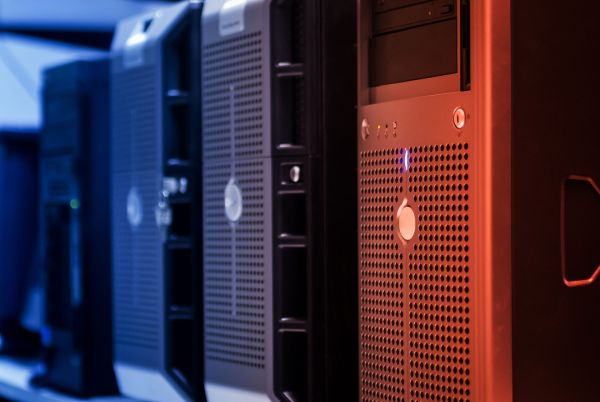
Rack server or tower – which one should you pick?
Choosing a server is not just a decision about what to buy today – but about how your company will operate for the next several years.

Rack server or blade – which one should you choose?
Rack or Blade – this is not just a question about the chassis, but about how your entire IT infrastructure operates.
Dell PowerEdge or HP ProLiant – a classic question for IT administrators and specialists. Where should you put your money?
The two most popular server systems on the market. Both proven. Both stable. Both have their supporters.
Rack servers – what are they and what you need to know before buying?
Rack servers are not just metal boxes for a cabinet – they're the backbone of many modern companies.

Tower servers – what are they and why are they still more cost-effective for many companies than rack servers?
Tower server is not a relic of the past – it's still a real, sensible option for companies that don't need an entire rack cabinet but want organized IT infrastructure.

Enterprise backup server – how much storage do you need, which RAID level, and what drives actually make sense?
A backup server is not a "cheaper version" of a production server.

Server setup for a small company with 5–20 users – what should you choose and why? Find out!
The first server in a small company doesn't need to be complicated – it just needs to work stably, quietly and safely for a few years.
Database server – how to choose a high-performance configuration?
A database doesn't forgive configuration mistakes – if hardware is poorly selected, the application starts to "choke", users wait for responses, and the IT department explains delays.
What server do you need for ERP and how do you configure it right?
ERP system can run smoothly for years – provided it stands on a well-selected server, not a random configuration "because it suffices".
Custom-built server – what does it actually mean and is it worth it compared to off-the-shelf?
If you're facing server selection and see "CTO ready to ship", the natural question is: is this actually better than ready-made configuration, or just a marketing name.

AI servers – is it better to buy GPU hardware on-premise or pay for cloud?
If you've been doing AI longer than a moment, sooner or later you hit that point: GPU bills start looking seriously concerning.

Local server or cloud – what actually makes more sense financially for your business?
If you're facing choice: set up your own server or go cloud, it's not a "technical" decision at all – only business one.
Which is better for AI work – a GPU server or a workstation? We'll help you decide.
If you reach moment when you wonder "should I keep pushing on workstation or move to server" – that means you're exactly at point where real AI infrastructure begins.
What is a recertified server and how is it different from a used one?
If you're facing server selection and see "recertified", "refurbished" or just "used" in offers – it's easy to get lost.
How to choose a GPU server for AI – without overpaying or ending up underpowered
If you're facing server selection for AI, problem usually isn't "which model to choose" but how much power you really need.

Best on-premise servers for AI work – 2026 ranking. Which ones are right for inference and which for training?
If you're thinking about AI on-premise, server choice doesn't start with Dell or HPE model, but with what you really want to do on it.

Planning AI projects in 2026 with GPU shortages – what's the strategy when servers are out of stock?
If you're planning AI project and counting on quick GPU server purchase – in 2026 you might be in for surprise.
Why are new AI servers getting more expensive every quarter and how do you avoid overpaying?
AI server prices are rising faster than most companies can realistically grasp – and this applies even to identical configurations.
Data center GPU lead times hit a year – what are your options when you can't wait 12 months?
No GPU access for next 12 months? That's not technical problem – only decision how you want to run project.

Leasing, renting or buying a server – which financing option makes sense for your infrastructure?
Most errors when buying server don't come from model choice, but how that equipment is financed.
Rising DDR5 and SSD prices in servers – what does this mean for your IT budget in 2026?
Memory cost in servers in 2026 stopped being detail – it's one of main budget components.
How to choose the right number of GPUs for your Dell PowerEdge AI server?
With GPU number in server it's easy to go wrong right at start.
Dell Precision or Lenovo ThinkStation – which workstation is the better choice?
Choice between Dell Precision and Lenovo ThinkStation rarely comes down to "what's better".
AI in finance – what server do you need for fraud detection and risk models?
Choice between Dell Precision and Lenovo ThinkStation rarely comes down to "what's better".
RAID in AI servers – when is SSD enough and when do you need NVMe?
If wondering whether to put SSD or NVMe in AI server – answer is: depends on what you really do on disk.
How to calculate TCO for an AI server – new vs recertified?
If facing AI server choice, purchase price alone tells little.
How to choose a server processor – without overpaying?
With server processors, it's easy to get things wrong right from the start.
Ranking of server processors 2026 – TOP 10 server processors
A server processor should be chosen for the application, not for the benchmark score alone - which is why this ranking is built around real business scenarios (virtualization, ERP, SQL, AI) rather than core count alone.
What is a server processor - how it works and how it differs from a home processor?
A server processor is a chip built on the same microarchitecture as its consumer counterpart, but equipped with enterprise-class features.
Intel Xeon or AMD EPYC – which server processor should you choose for your infrastructure?
Choosing a server processor is a bit like this: it's easy to head in the wrong direction right from the start.
Processor TDP – what is it and should you care when choosing a server?
If you're choosing a processor for a server and you've gotten stuck on the term TDP, there's really only one question: does that number in watts – 50 W, 85 W, 130 W, sometimes 280 W – tell you how much power the hardware will draw?

Disk array or multiple drives in a server? When and why is it worth it?
A question we hear from companies on a regular basis is: "Why do I need a separate storage array if I can just add more drives to the server?"
How to choose a disk array – what to look for?
Imagine two companies. The first bought an array "with plenty of headroom," right up against a premium budget – and three years later, half the shelves sit empty.
SSD vs HDD – which should you choose for a disk array in your server?
When a customer asks us about drives for an array, nine times out of ten we hear the same sentence: "SSD, because it's faster".

Critical Januscape Vulnerability (CVE-2026-53359) in KVM
Technical analysis of the Januscape vulnerability reveals a use-after-free flaw in the KVM/x86 shadow MMU mechanism.
RAID levels – which one should you pick for your server and why it's not a one-time decision?
Three letters, and so much confusion. RAID has been with us since the late 1980s, when a group of researchers realized that instead of one expensive drive, it's better to combine several cheaper ones and cleverly spread data across them.

SAN vs NAS vs DAS – what's the difference and which storage architecture should your company choose?
Three acronyms that keep coming up in every conversation about storage – and three completely different philosophies for connecting drives to business systems.
What is a company server – how does it work and how is it different from web hosting?
A business server is a dedicated computer whose sole job is to serve other devices in your company – sharing files, hosting a database, running ERP, handling email, performing backups.
Is a recertified GPU server safe for critical data?
A recertified GPU server can cost tens of percent less than a new enterprise configuration.
What types of company servers are there – which one should you choose for your business?
"What type of server should I choose?" is actually three different questions asked at once – and most confusion comes from mixing them up.

Which server to choose for video surveillance (CCTV/NVR) – how to match equipment to the number of cameras?
A surveillance server is sized around three numbers: camera count, stream bitrate, and recording retention period.
Disk array controller – what is it and how does it work?
A disk array controller is a chip that manages a group of drives as a single, coherent, fault-tolerant unit – it distributes data across drives, calculates parity, rebuilds the array after a drive failure, and speeds up writes using its own cache memory.
NVMe-oF – what is it and what is it used for?
You've got fast NVMe drives in your servers, but each one is tied to a single machine – and when one is running out of space while another has plenty to spare, you can't move it across.
Dell Compellent SC or PowerStore – which array should you choose?
Compellent SC is a proven, hybrid block array for classic storage workloads on a reasonable budget, while PowerStore is an enterprise-class native NVMe platform for virtualization, databases, and low-latency-sensitive environments.
New or recertified disk array – which should you choose for your company?
"Recertified" sounds like "used," and "used" sounds like "risk." Except that association doesn't match the numbers – even brand-new enterprise drives fail more often than their spec sheets promise, and recertification is a formalized process, not "dusting off old hardware."

Workstation or mobile laptop – which should you choose for your project team?
A desktop workstation wins everywhere raw power matters – 3D CAD, simulations, rendering, AI – while a mobile laptop makes sense when a designer needs to work in the field, at a client site, or across multiple locations.
How to choose a workstation for your company – a step-by-step guide
Choosing a workstation doesn't start with "which processor," but with "what exactly is it for" – it's the workload type, not the budget, that determines a sensible specification.
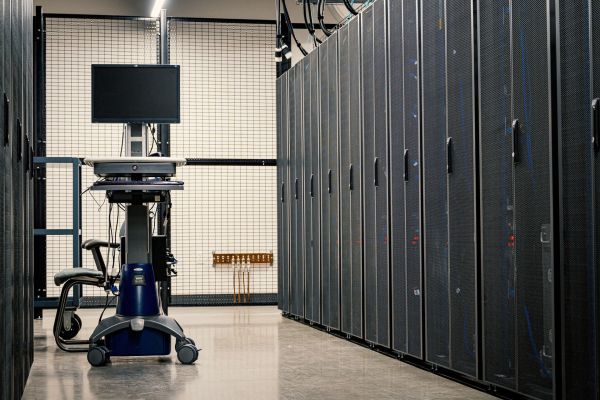
How many servers does a company need – one powerful machine or several smaller ones?
The number of servers depends on three things: the acceptable amount of downtime, the nature of the workload and legal requirements.
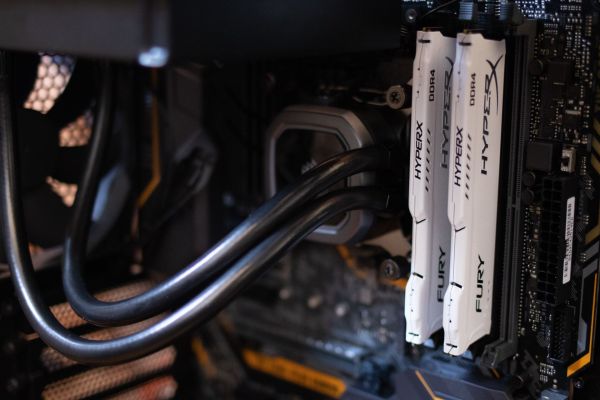
Your first company server – what to avoid during the first deployment?
Three mistakes cost the most: no tested backup, remote access exposed to the internet without MFA, and licensing left out of the budget.

Lenovo ThinkSystem or Dell PowerEdge – which to choose as your company server? A comparison for the IT department
Bad news for anyone looking for a simple answer: under the bonnet these servers are almost twins – the same Intel Xeon or AMD EPYC, the same DDR5 memory, the same NVMe drives.

A NAS or a company server – how do they differ and when should you choose which?
Salespeople like to call a NAS a “file server”, so it is easy to think it is simply a cheaper server.
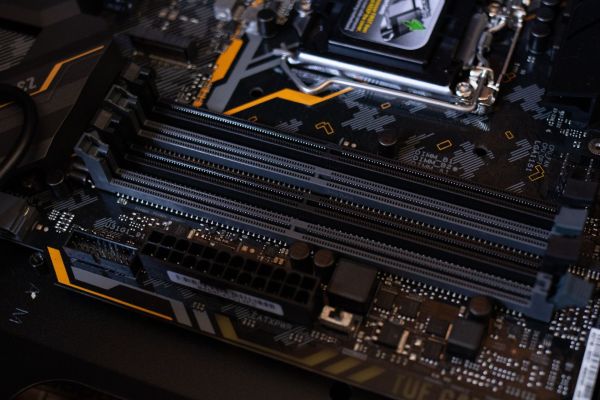
How much RAM in a company server – how not to overpay and not to run short of memory
Only two years ago the answer was: buy some spare, memory is cheap. In 2026 that advice costs a fortune – a 64 GB DDR5 RDIMM module went up from around 255 to over 870 dollars in six months, and forecasts point to 1,586 dollars by the end of the year.
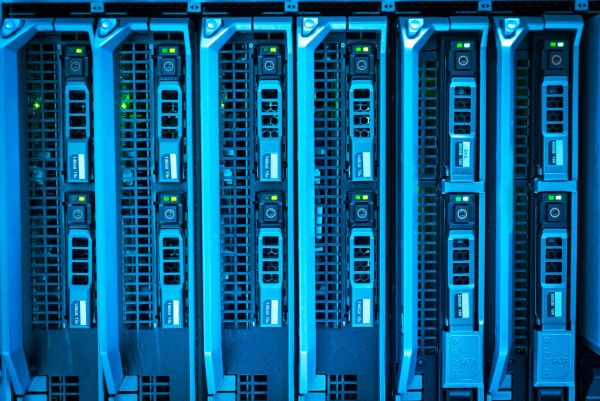
Dell Compellent SC or Dell PowerStore – which storage array platform should you choose? What are the differences?
This comparison has one dominant context today, which has to be stated straight away: Dell support for the SC5020 and SC5020F models ends on 31 August 2026. If you have one of these arrays, the question is no longer “is it worth migrating” but “to what and when”.