/ PLN
/ PLN
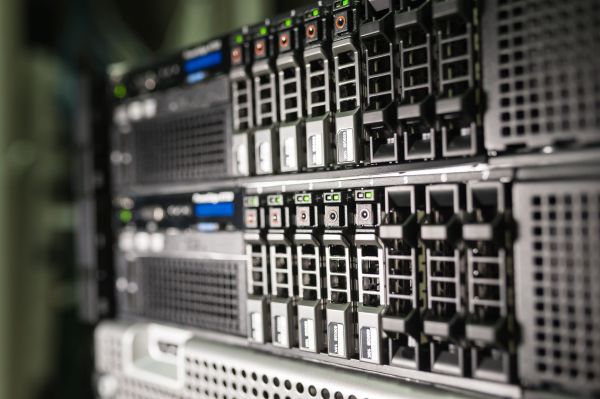
Dell PowerEdge R7425 is one of those servers that looks "just solid" on paper, but when you see it with AI, that's where its real advantage becomes clear. Because here it's not just about the number of cores or CPU benchmark. This server was built for a very specific scenario: lots of GPUs, lots of NVMe and enormous data flow between them.
And that's exactly why AMD EPYC in R7425 can be a more sensible choice than classic Xeon. More PCIe lanes, more memory channels and the ability to pack a very dense configuration of GPU + storage in a single 2U mean this model still works great in AI, analytics and memory-bound environments.
Does the greater number of PCIe lanes in AMD EPYC really make a difference in AI?
Yes – and much greater than most people assume at the beginning of a project. In AI, the problem very quickly ceases to be the processor itself. The bottleneck becomes communication between GPUs, storage and RAM.
In R7425 this is particularly evident. The platform based on 2× AMD EPYC offers even 128 PCIe lanes, while many Xeon configurations from the same era have significantly fewer of these lanes. This directly impacts how many:
- GPUs you can install,
- NVMe drives you can run in parallel,
- fast network cards you can add without bottleneck.
In practice this means something very concrete. If you're building an AI environment with:
- several GPU cards,
- fast storage for training data,
- large amounts of RAM,
then on a classic Xeon you'll quickly reach a point where:
- PCIe lanes run out,
- storage starts fighting GPUs for bandwidth,
- you need to improvise with additional nodes or expensive networking,
R7425 was designed for exactly the opposite scenario – to fit as much I/O as possible in one chassis without immediately "clogging" the platform.
When does Dell R7425 allow you to combine lots of GPUs and fast NVMe?
R7425 shows its advantage exactly when an AI project needs both powerful GPUs and very fast local storage simultaneously. And there are more such scenarios today than people think.
If you're working with:
- large datasets,
- local datasets subject to regulations,
- on-premise environments,
it suddenly turns out that GPU alone isn't enough. The model needs somewhere to read data from – quickly and without latency.
That's exactly why configurations like:
- 2× EPYC 7F32,
- 1536 GB RAM,
- 24× NVMe / SSD,
- 3× Nvidia L4 24 GB,
start to make enormous sense in AI. This is no longer just a "server with GPU". This is a complete compute node that:
- stores data,
- processes it locally,
- handles training or inference,
without needing to split infrastructure across several separate machines. And this is where EPYC makes a difference. A large number of PCIe lanes allows you to maintain high throughput for both GPU and NVMe simultaneously, without a situation where one starts throttling the other.
Why do memory-intensive AI models feel better on EPYC than on classic Xeon?
Because with many AI workloads the problem isn't lack of CPU power, but delivering data to GPU fast enough. And that's a matter of memory and bandwidth.
R7425 supports:
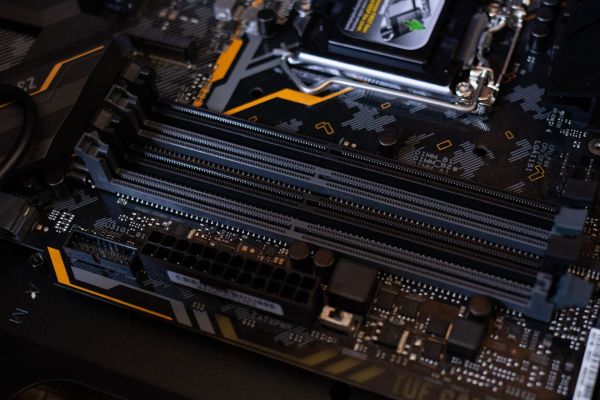
- up to 32 DIMM slots,
- even 4 TB RAM,
- very wide memory bus,
And this makes a huge difference with:
- embeddings,
- feature engineering,
- Apache Spark,
- in-memory analytics,
- scoring running in RAM,
In such scenarios, GPU very often doesn't wait for computations. It waits for data. And here EPYC's advantage becomes practical, not marketing. A greater number of memory channels allows you to maintain stable data flow between CPU, RAM and GPU, so the entire pipeline runs more smoothly.
That's why Dell positioned R7425 not just for AI, but also for:
- SAP HANA,
- Apache Spark,
- VDI and memory-intensive environments,
Because this platform was designed from the start for enormous data traffic, not just "raw" processor power.
One powerful R7425 instead of two weaker servers – where does the TCO advantage begin?
The greatest advantage of R7425 very often doesn't lie in benchmarks, but in the fact that one server can replace two weaker nodes. And that's exactly where real savings begin.
If you can fit in one chassis:
- several GPUs,
- a dozen or dozens of NVMe drives,
- over 1 TB RAM,
then you suddenly stop building separate:
- storage server,
- GPU server,
- additional data node,
And that affects everything:
- fewer licenses,
- less space in rack,
- lower power consumption,
- simpler environment management,
That's exactly why EPYC in AI very often wins not "raw power", but the relationship of performance + I/O + memory + total infrastructure cost.
For projects like:
- fraud detection,
- risk scoring,
- many parallel AI workloads,
- multi-tenant environments,
R7425 allows you to consolidate the environment very strongly without quickly hitting platform limits.
Does R7425 still make sense in 2026 when R760xa and XE9680 are already on the market?
Yes – especially where the ratio of cost to capabilities matters, not chasing the latest platform. R760xa and XE9680 are more powerful, have newer CPUs, more GPU capabilities and higher compute density, but not every project needs hyperscale-class infrastructure.
R7425 still performs very well in environments like:
- AI inference,
- local fine-tuning,
- data analytics,
- GPU-enabled VDI,
- hybrid environments,
Especially when the server is well-configured:
- 2× AMD EPYC,
- 512 GB - 1 TB RAM,
- NVMe RAID,
- 2-3 L4, A40 or RTX 6000 Ada class GPUs,
Such a setup still delivers enormous compute power at a much lower entry cost than new GPU-first platforms.
It's also important that R7425 scales storage and memory very well. And in AI that's often more important than "the newest processor". If a model operates on large datasets or requires intensive data traffic between RAM and NVMe, this server can still do tremendous work.
There's also the issue of availability. New AI platforms can be difficult to purchase or have very long lead times, and a well-configured R7425 can be deployed faster and much more cost-effectively.
When will Xeon be a better choice than AMD EPYC in an AI server?
EPYC doesn't always and everywhere win. There are scenarios where Xeon simply fits the environment better. Especially when you look beyond just the number of PCIe lanes.
Xeon performs very well where:
- infrastructure is already based on Intel,
- compatibility with specific software matters,
- environment uses Intel optimizations,
This applies especially to:
- parts of enterprise systems,
- older VMware environments,
- applications heavily dependent on high CPU clock speed,
There are also AI workloads that benefit more from:
- high IPC,
- strong single cores,
- lower CPU latency,
than from a huge number of PCIe lanes. That's why platforms like:
- R760xa,
- XE8640,
- new Xeon Scalable designs,
work great in very heavy GPU environments where:
- GPU is absolutely the center of the system,
- you need the latest PCIe Gen5,
- you're counting on maximum per-node performance,
Here the advantage of new Xeons becomes clear. Especially with the latest H100 or B200 class GPUs. That's why choosing EPYC vs Xeon shouldn't look like "AMD versus Intel". It's a decision about what type of infrastructure you're building and what will be its bottleneck in 2-3 years.
How to configure Dell R7425 for inference, fine-tuning and larger AI workloads?
The biggest mistake in configuring R7425 is trying to build a "universal server for everything". AI very quickly shows that different resources are needed for inference, different for training models, and yet different for multitasking work.
If the server is to handle inference:
- fast data access and VRAM will matter much more than a huge number of GPUs,
- 1-2 more powerful cards often work better,
- it's worth investing in fast NVMe and more RAM,
With fine-tuning the situation changes:
- parallelism starts to matter,
- larger batch size,
- ability for multiple teams to work simultaneously,
And then configurations with:
- 2-3 GPUs,
- 512 GB+ RAM,
- RAID 10 on NVMe,
start to make much more sense.
For larger AI workloads:
- embeddings,
- Spark AI,
- multi-user environments,
- intensive data processing,
R7425 scales very well with memory and storage. That's exactly why this model still often appears in on-premise AI environments. A well-configured AI server doesn't rely on throwing "maximum number of GPUs" at it. It's about balance:
- CPU,
- RAM,
- NVMe,
- cooling,
- PCIe bandwidth,
Because only then does GPU actually work at full performance.
FAQ
Does R7425 still work for AI in 2026?
Yes – especially for inference, fine-tuning and memory-heavy environments.
Biggest advantage of AMD EPYC in R7425?
Large number of PCIe lanes and very good storage + GPU scalability.
Will R7425 support modern GPUs?
Yes, but you need to properly match power supply, cooling and PCIe configuration.
When is Xeon a better choice?
When environment is heavily Intel-based or you need the newest GPU-first platforms.
Is R7425 suitable for local on-premise AI?
Very well – especially where data control matters.
How much RAM makes sense in AI on R7425?
Usually a minimum of 256-512 GB, and for larger workloads even more.
Most common mistake when building such a server?
Focusing only on GPU and neglecting RAM, NVMe and PCIe bandwidth.