/ PLN
/ PLN
A few years ago, a recertified server was mainly associated with "cheaper used equipment". Today the situation looks completely different. With lead times for new GPUs measured in months and increasingly higher prices for DDR5 memory and AI accelerators, a well-configured Dell PowerEdge Recertified has become for many companies a normal way to quickly launch AI infrastructure.
And importantly – it's not just about savings. Increasingly it's simply about availability, reasonable deployment time and the ability to build an AI environment without waiting a year for new equipment.
Why do AI companies increasingly look at recertified PowerEdge instead of new servers?
The reason is simple – new GPU servers are increasingly difficult to obtain, and budgets aren't growing as fast as AI infrastructure prices. In 2026, many companies face a very similar problem: the AI project is ready to launch, but equipment "from the first channel" has lead times even measured in 36-52 weeks.
In addition, there are:
- rising GPU prices,
- limited availability of HBM and DDR5 memory,
- increasing cost of building local infrastructure.
And this is where recertified PowerEdges start to look very sensible. Especially models:
- R740,
- R750,
- R760xa,
- GPU-ready platforms with A40, L4 or T4,
because they allow you to launch an environment much faster and significantly cheaper. The biggest mental shift is that recertified Dell has stopped being treated as an "emergency option". For many AI teams it's simply:
- a way to shorten time-to-market,
- the ability to start without huge CAPEX,
- a sensible compromise between performance and availability.
Especially when the workload doesn't absolutely require the newest H100 or Blackwell class GPUs.
How does recertified Dell differ from regular "refurbished" and why does this matter enormously?
The biggest problem with the used equipment market is that under the label "refurbished" practically anything can be hiding. And that's exactly why the distinction between regular refurbished and Dell Recertified is so important.
Recertified Dell is equipment that returned to the official manufacturer program:
- after demo,
- after POC,
- after canceled order,
- after trade show display,
and then underwent a full remanufacturing and testing process compliant with OEM standards. This is an important difference because we're talking about servers:
- with original service tag,
- with full iDRAC,
- with firmware updated by Dell,
- with the option for ProSupport coverage,
meaning very close to new enterprise equipment. And that's exactly why such platforms make sense for AI. You get:
- redundant power supplies,
- hot-swap bays,
- PERC controllers,
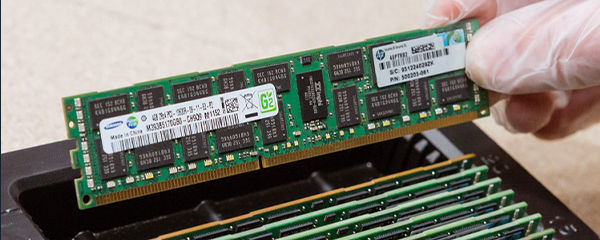
- ECC RAM,
- full possibility for further expansion,
without getting into "anonymous refurb", where often nothing is known except that "the server works".
When does recertified Dell server make the most business sense for AI and GPU?
The greatest sense appears when deployment time and a reasonable budget are more important than the newest generation. And this is exactly the scenario that today applies to a huge portion of companies developing on-premise AI.
If you're building:
- local inference,
- fine-tuning environment,
- AI lab,
- POC for data science team,
then recertified PowerEdge often allows you to take a step forward without blocking your entire budget on just the chassis.
The differences can be very concrete. According to market analysis:
- recertified PowerEdge can cost 30-40% less than a new equivalent,
- older generations even 70-80% less compared to new catalog configurations.
And this makes a huge difference in AI, where the largest costs are generated anyway by:
- GPUs,
- RAM,
- fast NVMe storage,
Thanks to this, instead of overpaying for just the platform, you can allocate a larger portion of your budget for:
- more powerful GPUs,
- more VRAM,
- more RAM,
meaning exactly those elements that truly impact the performance of AI workloads.
Does recertified PowerEdge really work for inference, fine-tuning and local AI models?
Yes – and it's in exactly such applications that recertified servers make the most sense today. Most companies aren't building infrastructure for training giant models from scratch. Much more often it's about:
- inference,
- scoring,
- image analysis,
- fine-tuning existing models,
- development and testing environments.
For such workloads you don't need the newest H100 or Blackwell. Much more important is:
- stable enterprise chassis,
- appropriate amount of RAM,
- fast NVMe,
- sensible GPU card with large VRAM.
And this is exactly where recertified PowerEdges like:
- R740,
- R750,
- R760xa,
perform very well. A well-configured server with:
- A40,
- L4,
- T4,
- or even V100,
can still very efficiently handle:
- local AI models,
- company chatbots,
- embeddings,
- classic ML and analytics,
without needing to spend hundreds of thousands of zlotys on the latest GPU platform. And that's exactly why recertified equipment increasingly goes to:
- AI labs,
- R&D departments,
- staging environments,
- backup inference,
meaning everywhere sensible performance matters, not "the newest sticker on the chassis".
When is it better to skip recertified server and go for a new platform?
There are situations where a new server will simply be a safer choice. Especially when infrastructure needs to operate in a very rigorous environment or the project requires absolutely the newest GPUs.
This applies mainly to:
- very large AI trainings,
- 24/7 environments with strict SLA,
- infrastructure subject to restrictive compliance,
- projects planned for 7-10 years without major equipment replacement,
In such cases, new platforms:
- have longer support cycles,
- pass audits more easily,
- fit better into security policies.
There's also the issue of newest GPUs. If you need:
- H100,
- B200,
- newest HGX platforms,
then the recertified channel simply doesn't offer them yet or availability is minimal. That's why the very commonly seen model today looks like this:
- production → new platforms,
- lab, staging, inference → recertified PowerEdge.
And this allows you to sensibly distribute the budget without building the entire infrastructure solely on new servers.
What to look for before buying a recertified Dell server for AI to avoid burning your budget?
The biggest mistake is buying a recertified server "just by price". With AI, what matters much more than the chassis itself is whether the configuration really fits the workload.
The first thing is the source of the equipment. If the server comes from:
- Dell Recertified program,
- Dell Outlet,
- authorized partner,
then you have much greater predictability of:
- warranty,
- support,
- equipment history,
- parts availability.
The second thing is configuration. It's very easy to overpay for, for example:
- overly powerful CPU,
- too little RAM,
- storage that can't keep up with GPU.
That's why with AI, good balancing is much more important:
- GPU,
- memory,
- NVMe,
- PCIe bandwidth,
than "highest specs" on paper. It's also worth checking:
- whether there's room for expansion,
- how many GPUs the chassis can fit,
- whether cooling is prepared for 24/7 operation,
- what warranty level you're getting.
Because a well-selected recertified PowerEdge can run for a very long time without problems. A poorly selected one will only be a cheap server that quickly starts limiting your project.
FAQ
Is recertified Dell just a regular used server?
No – the equipment undergoes remanufacturing and manufacturer testing.
How much can you save?
Usually around 30-40%, sometimes more.
Does such a server have warranty?
Yes – often with ProSupport and on-site options.
Does recertified PowerEdge work for AI?
Very well, especially for inference and fine-tuning.
Can it be expanded?
Yes – RAM, drives and GPUs can be further scaled.
When is it better to buy a new server?
For ultra-critical systems or newest GPUs.
Biggest mistake when buying?
Looking only at price instead of matching it to your AI workload.